





What's Happening?
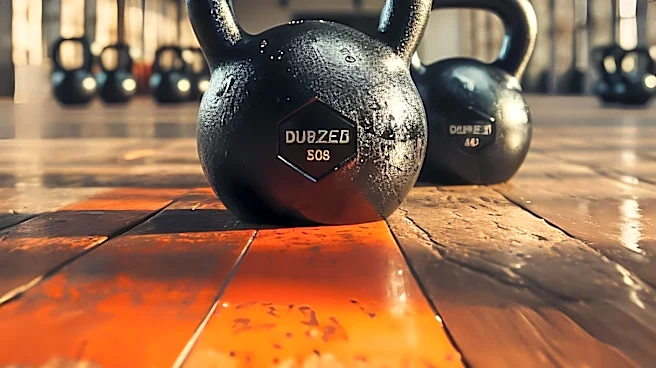
Kettlebells are being highlighted as highly effective and versatile tools for individuals new to strength training, particularly for toning leg muscles and building upper body strength. According to BOXROX, exercises like the goblet squat, reverse lunge,
and glute bridge, when performed with kettlebells, target major muscle groups including quadriceps, glutes, hamstrings, and calves. These exercises are recommended for beginners as they provide an effective stimulus for muscle growth and strength development without requiring heavy weights. The emphasis is on proper technique, controlled movements, and progressive overload, which can be achieved with light weights or even bodyweight for those just starting. Kettlebells facilitate movements that cover pressing, pulling, and shoulder strength, contributing to overall fitness and muscle definition.
Why It's Important?
The increasing recognition of kettlebells for beginner fitness is significant for the U.S. health and wellness industry. It broadens the accessibility of strength training, potentially attracting a wider demographic who might be intimidated by traditional heavy lifting. By emphasizing proper form and gradual progression, kettlebells can help reduce the risk of injury, a common concern for new exercisers. This trend could lead to increased sales of kettlebell equipment and a greater demand for certified trainers specializing in kettlebell instruction. Furthermore, promoting effective, accessible strength training methods like kettlebell routines can contribute to improved public health outcomes by encouraging more individuals to engage in regular physical activity, addressing issues such as muscle atrophy and mobility limitations, especially among older adults.
What's Next?
The growing popularity of kettlebells for beginners is likely to drive further innovation in fitness programming and equipment design. We can anticipate an increase in online and in-person kettlebell training courses, workshops, and specialized fitness classes tailored to different skill levels. Fitness equipment manufacturers may focus on developing more ergonomic and user-friendly kettlebell designs, potentially incorporating smart technology to track progress and provide real-time feedback. Additionally, as more people adopt kettlebell training, there could be a rise in research exploring its long-term benefits for various populations, including those with specific health conditions or rehabilitation needs. This could further solidify kettlebells' position as a fundamental component of comprehensive fitness regimens.
Beyond the Headlines
Beyond their immediate fitness benefits, the embrace of kettlebells by beginners reflects a broader shift in fitness culture towards functional strength and holistic well-being. This movement prioritizes practical strength that translates to daily activities and injury prevention, rather than solely focusing on aesthetic outcomes or maximal lifts. The emphasis on controlled movements and proper technique fosters a more mindful approach to exercise, encouraging individuals to understand their bodies better. This cultural shift could lead to a more sustainable and inclusive fitness landscape, where individuals are empowered to build strength and maintain mobility throughout their lives, moving away from transient fitness fads towards enduring health practices. The versatility of kettlebells also supports home-based workouts, making fitness more accessible regardless of gym access.