





What's Happening?
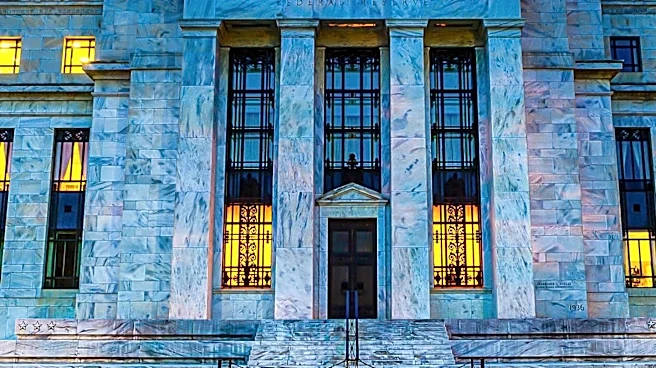
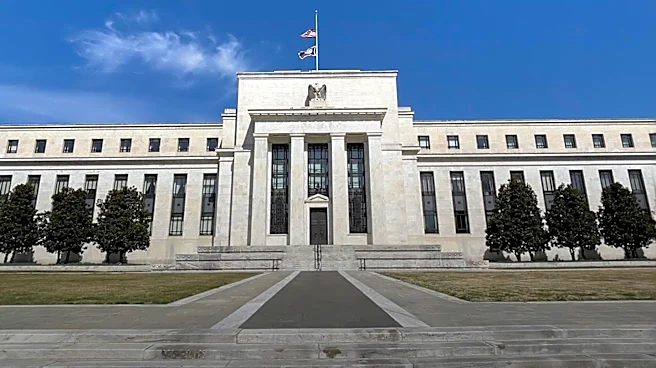
Federal Reserve officials indicated in October that additional interest rate increases would likely be necessary to curb inflation, despite their decision to temporarily hold rates steady. Minutes from the Federal Open Market Committee (FOMC) meeting
revealed that while the benchmark overnight borrowing rate remained between 3.75%-4%, 'almost all participants' believed further action was appropriate. The consumer price index in October rose 0.4% for all items and 0.3% for the core, both exceeding expectations. A significant point of discussion among policymakers was the potential impact of artificial intelligence (AI) on inflation, with some identifying it as a 'material source of inflation risk' due to increased demand and complex financing structures. Some officials advocated for a quarter-point hike at the October meeting, and a few even suggested a larger increase might be needed in December if inflation data remained unfavorable.
Why It's Important?
The Federal Reserve's stance on continued interest rate hikes signals a persistent commitment to bringing inflation down to its 2% target, which directly impacts borrowing costs for consumers and businesses across the U.S. economy. Higher rates can cool demand, but they also increase the cost of loans for mortgages, auto purchases, and business investments, potentially slowing economic growth. The explicit concern over AI's inflationary potential introduces a new dimension to monetary policy considerations. The rapid buildout of AI infrastructure, driven by optimism and significant investment, is currently boosting demand and inflation. This could lead to increased scrutiny of the technology sector's financial practices and its broader economic footprint, affecting investment strategies and market stability. The debate within the Fed about the pace and magnitude of future hikes underscores the uncertainty surrounding the inflation outlook and the challenges in achieving a soft landing for the economy.
What's Next?
Investors widely anticipate a quarter-percentage-point rate increase at the Federal Reserve's December meeting, with some officials, like Governor Christopher Waller, suggesting the possibility of a larger hike or a series of smaller hikes if inflation remains stubborn. The upcoming inflation data will be crucial in shaping the Fed's decisions. The ongoing discussion about AI's role in inflation suggests that policymakers will continue to monitor investment trends and financing structures within the technology sector. While AI is currently seen as an inflationary force due to demand, Federal Reserve Vice Chair Philip Jefferson noted that potential productivity gains from AI that could ease price pressures are likely to materialize only 'in the future.' This implies that the immediate focus will remain on managing demand-side inflation through traditional monetary tools.
Beyond the Headlines
The Federal Reserve's focus on AI as a 'material source of inflation risk' highlights a deeper, less obvious implication: the potential for technological advancements to disrupt established economic models and introduce new forms of financial instability. The mention of 'off-balance-sheet leasing commitments and circular financing arrangements among AI-related firms' suggests concerns about opaque financial practices that could amplify losses if AI investments underperform. This could lead to increased regulatory attention on the tech industry's financial dealings, potentially impacting venture capital flows and the growth trajectory of AI companies. Furthermore, the tension between AI's short-term inflationary impact and its long-term potential for productivity gains presents a complex challenge for policymakers, requiring a nuanced approach that balances immediate price stability with future economic growth. This situation underscores how rapidly evolving technologies can create unforeseen economic pressures and necessitate adaptive policy responses.