






What's Happening?
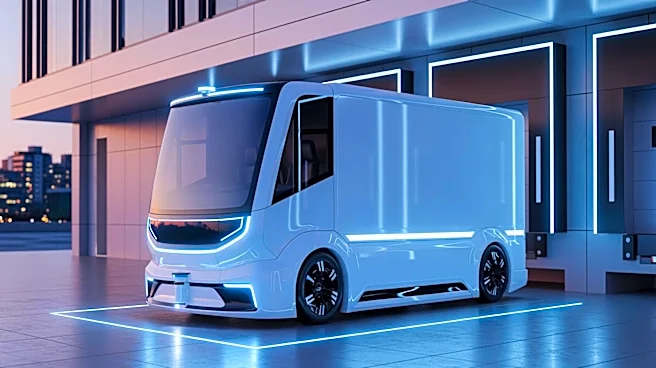
PepsiCo has announced a significant expansion of its driverless truck operations in partnership with Gatik, a company specializing in autonomous freight technology. This strategic partnership aims to deploy autonomous trucks to approximately 250 retail
locations across Texas, Arizona, and Arkansas, serving major retailers such as Walmart and Dollar General. This initiative marks the largest commercial autonomous freight deployment to date. The collaboration between PepsiCo and Gatik began in 2022, and the companies have since removed human backup drivers from the cabs on public roads. The move is part of PepsiCo's strategy to create a more reliable and future-ready supply chain. The deployment of autonomous trucks is expected to address rising labor costs and high turnover rates in the trucking industry, which have been exacerbated by an aging workforce and regulatory changes affecting driver eligibility.
Why It's Important?
The expansion of autonomous truck operations by PepsiCo and Gatik is significant for several reasons. It addresses the trucking industry's ongoing challenges, such as high turnover rates and increasing labor costs. The American Trucking Associations projects a need for 1.2 million new drivers over the next decade, highlighting the urgency of finding alternative solutions. Autonomous trucks offer a potential reduction in operational costs, as they are not subject to the same labor constraints as human drivers. This technology could lead to a 42% reduction in cost per mile, primarily by eliminating driver wages. Additionally, autonomous trucks can operate beyond the 11-hour daily limit imposed on human drivers, increasing efficiency on time-sensitive routes. The deployment also signals a shift towards more sustainable and scalable logistics solutions, potentially setting a precedent for other companies in the supply chain industry.
What's Next?
As PepsiCo and Gatik continue to expand their autonomous truck operations, other companies may follow suit, especially those with high-frequency, fixed-route regional distribution needs. The success of this deployment could encourage further investment in autonomous technology, leading to broader adoption across the industry. However, the widespread implementation of autonomous trucks will depend on the development of supportive infrastructure and regulatory frameworks. Gatik's collaboration with Isuzu and Nvidia to mass-produce Level 4 autonomous trucks by 2027 indicates a commitment to scaling this technology. Companies considering similar deployments will need to evaluate their specific logistics needs and state-level regulations regarding autonomous vehicle operations. The convergence of retiring drivers and advancing technology may create a natural transition to autonomous solutions, minimizing workforce displacement.