






What's Happening?
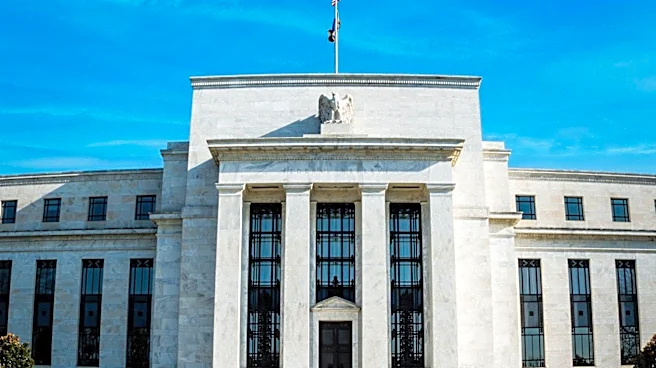
Retail investors are closely examining U.S. energy stocks in anticipation of a potential Federal Reserve interest rate hike in December 2026. Companies like Riley Exploration Permian, Northern Oil and Gas, and Magnolia Oil & Gas are being screened due
to their direct exposure to domestic hydrocarbon drilling and production, and how their operations might be affected by tightening Fed policy. Riley Exploration Permian, a U.S. shale producer, is expanding its development activity in New Mexico, expecting higher oil volumes. Northern Oil and Gas, an independent producer, is reinforcing its non-operated, multi-basin model by adding Utica gas and Canadian Duvernay light oil. Magnolia Oil & Gas, focused on South Texas, recently acquired WildFire Energy, significantly increasing its net acreage and proved developed reserves, with expected annual run-rate savings of at least US$100 million by the end of 2027.
Why It's Important?
A Federal Reserve rate hike can significantly influence the U.S. energy sector. Higher interest rates increase borrowing costs for energy companies, potentially impacting their capital-intensive operations, acquisition strategies, and expansion plans. This can affect profitability and cash flow, especially for companies with substantial debt. For U.S. shale producers like Riley Exploration Permian, Northern Oil and Gas, and Magnolia Oil & Gas, the cost of financing new drilling projects and infrastructure development becomes more expensive. The ability of these companies to maintain or increase production volumes and achieve cost efficiencies, such as those projected by Magnolia Oil & Gas from its WildFire Energy acquisition, will be critical. Investors are assessing how these companies' financial health and operational strategies will withstand a tighter monetary policy environment, as early volatility often gives way to different long-term outcomes in the sector.
What's Next?
The U.S. energy sector will continue to monitor the Federal Reserve's actions and economic data, particularly inflation reports, which will guide future interest rate decisions. Energy companies will likely focus on optimizing their capital structures, managing debt, and enhancing operational efficiencies to mitigate the impact of potentially higher borrowing costs. Companies like Riley Exploration Permian will need to ensure their infrastructure projects deliver expected volume increases, while Northern Oil and Gas will assess how its multi-basin model can smooth earnings amidst market fluctuations. Magnolia Oil & Gas will be under pressure to realize the projected cost synergies from its recent acquisition. The market will also be looking for signs of how changes in interest rates affect commodity prices and overall demand for oil and gas, which will directly influence the revenue and profitability of these U.S. energy producers.
Beyond the Headlines
The scrutiny of U.S. energy stocks in anticipation of a Fed rate hike underscores the intricate relationship between monetary policy and specific industrial sectors. While higher rates generally aim to cool the economy, their impact on the energy sector can be multifaceted. On one hand, increased financing costs can hinder investment in new projects, potentially affecting future supply. On the other hand, a stronger U.S. dollar, often a consequence of rate hikes, can make dollar-denominated oil cheaper for international buyers, potentially boosting demand. This situation also highlights the ongoing debate about the role of domestic energy production in the U.S. economy, particularly in the context of energy independence and global supply chain stability. The ability of these companies to adapt to changing financial landscapes will be a key determinant of their long-term viability and contribution to the nation's energy security.