
What's Happening?
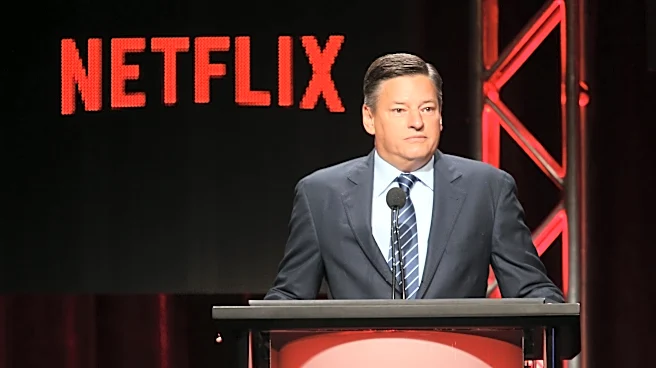
Netflix Co-CEO Ted Sarandos has publicly addressed the company's decision to lay off thousands of employees, stating that the move, while difficult, was essential for the streaming giant's future health.
In his first interview since the job cuts, Sarandos explained that the reductions followed a period of continuous expansion within Netflix's large workforce. He noted that while many companies routinely make such staffing adjustments, Netflix had not undertaken a restructuring of this scale in approximately five years. Sarandos emphasized that the departing staff were highly capable individuals and that the layoffs were a rare occurrence, not a reflection of their contributions. He also commented on the departures of top executives Bela Bajaria and Dan Lin, explaining that leadership needs evolve as a business progresses. Last month, Netflix announced it would lay off roughly 6% of its employees, impacting about 1,000 workers across product, tech, legal, and HR teams.
Why It's Important?
These layoffs at Netflix are significant as they reflect a strategic recalibration within a leading company in the highly competitive streaming industry. Sarandos's justification highlights a shift from rapid, expansive growth to a more disciplined approach focused on efficiency and long-term sustainability. This move could signal a broader trend within the tech and entertainment sectors, where companies that experienced rapid growth during the pandemic are now optimizing their operations. For employees in these sectors, it underscores the dynamic nature of job security, even within successful companies. For investors, the layoffs might be viewed as a positive step towards improved financial health and profitability, as Netflix is reportedly still growing at double-digit rates and on track for substantial profits. The decision also impacts the company's culture and morale, requiring careful management to maintain productivity and innovation among remaining staff.
What's Next?
Following these significant layoffs, Netflix will likely focus on integrating the remaining teams and ensuring that the organizational changes lead to the intended improvements in efficiency and strategic focus. The company's leadership will need to reinforce its vision and strategy to maintain employee morale and productivity. From a business perspective, Netflix will continue to invest in high-impact areas to enhance its service, drive growth, and foster innovation, as stated by Sarandos and Co-CEO Greg Peters in an internal email. The streaming giant will also be closely watched by competitors and analysts to see how these structural changes impact its content strategy, subscriber growth, and financial performance in the coming quarters. The company's ability to demonstrate sustained growth and profitability post-restructuring will be a key indicator of the success of these difficult decisions.
Beyond the Headlines
The layoffs at Netflix, framed as a move towards a 'healthier' company, reflect a broader re-evaluation of growth strategies in the tech and media industries. This isn't just about cost-cutting; it signals a maturation of the streaming market where hyper-growth phases are giving way to more sustainable, profit-driven models. The narrative of 'difficult but necessary' decisions often masks the human cost of such corporate restructuring, raising questions about corporate responsibility and employee welfare in rapidly evolving sectors. Furthermore, the departure of key executives like Bela Bajaria and Dan Lin, explained as a need for different leadership at different stages, highlights the relentless pressure on top-tier talent to continuously adapt to evolving business demands. This constant churn at the executive level can influence creative direction and strategic priorities, potentially impacting the content that subscribers ultimately see.