



What's Happening?
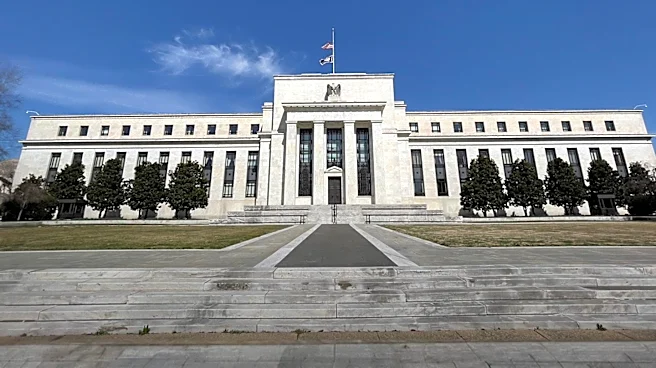
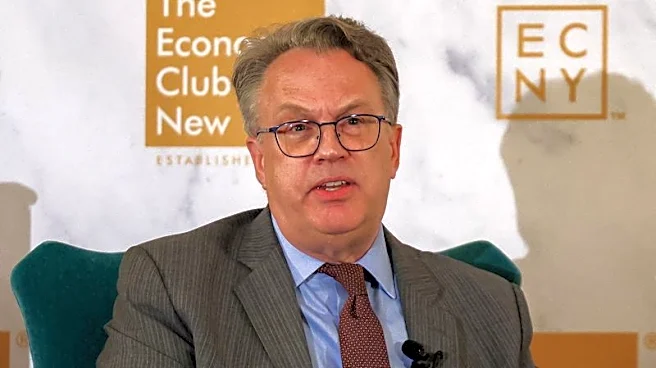
John Williams, President of the Federal Reserve Bank of New York, has indicated that the Federal Reserve is prepared to implement interest rate hikes if inflation does not ease as anticipated. In a recent interview, Williams expressed optimism that inflationary
pressures would gradually decrease, but emphasized the central bank's readiness to act if necessary. He highlighted that energy prices and trade tariffs, which have been significant inflation drivers, may have peaked, allowing disinflationary forces to take effect. Williams reiterated the Fed's commitment to achieving a 2% inflation target by 2028, stating that the current interest rate policy is well-positioned to meet this goal.
Why It's Important?
Williams' statements are crucial as they reflect the Federal Reserve's ongoing strategy to manage inflation, a key concern for the U.S. economy. The potential for interest rate hikes underscores the Fed's proactive stance in ensuring price stability. This approach could have significant implications for various economic stakeholders, including businesses, consumers, and investors. Higher interest rates may lead to increased borrowing costs, affecting consumer spending and business investments. The Fed's actions will be closely monitored by financial markets, as they could influence economic growth and employment levels. The central bank's ability to balance inflation control with economic stability remains a critical focus.
What's Next?
The Federal Reserve will continue to monitor inflation data closely in the coming months to determine the necessity of interest rate adjustments. Economic indicators, such as core inflation rates and market conditions, will play a pivotal role in shaping the Fed's policy decisions. Stakeholders, including businesses and investors, will need to prepare for potential changes in monetary policy, which could impact financial planning and market dynamics. The Fed's communication and transparency regarding its policy intentions will be vital in managing market expectations and ensuring economic stability.