








What's Happening?
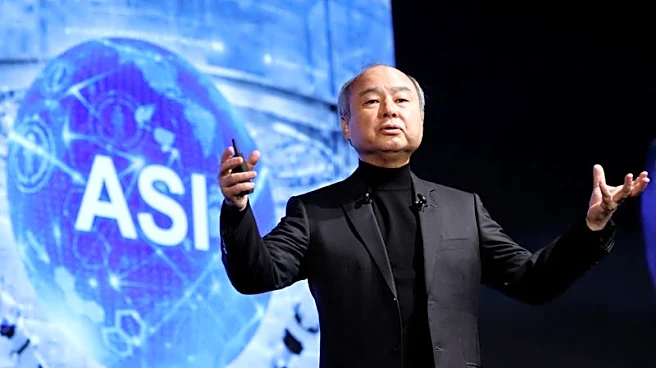
SoftBank Group's CEO, Masayoshi Son, has emphasized the necessity of a $5 trillion annual global investment to support the burgeoning demand for artificial intelligence (AI). Speaking at an annual company event in Tokyo, Son dismissed concerns about a potential
AI investment bubble, comparing such skepticism to outdated doubts about the utility of cars and planes. He argued that AI will fundamentally transform lives and generate significant profits. Son, a pioneer in technology investments, has been a long-time advocate for AI, having invested tens of billions in the sector. He predicts that by 2040, AI-related industries will account for approximately 20% of the world's GDP. SoftBank, through its Vision Funds, has invested heavily in AI, including a $34.6 billion investment in OpenAI. The company has also divested from Nvidia to reallocate funds towards AI and data center investments.
Why It's Important?
The call for substantial investment in AI by SoftBank's CEO highlights the growing recognition of AI's potential to reshape global industries. This push for investment underscores the anticipated economic impact of AI, which could revolutionize sectors such as data centers, chip production, and energy systems. The projected transformation of 20% of the global GDP by AI-related industries by 2040 suggests significant shifts in economic structures and job markets. For the U.S., this could mean increased competition in technology and innovation, necessitating strategic investments to maintain a competitive edge. Companies and policymakers may need to consider the implications of AI on employment, privacy, and regulatory frameworks as the technology becomes more integrated into daily life.
What's Next?
As AI continues to evolve, stakeholders in the U.S. and globally will likely focus on developing infrastructure to support AI advancements. This includes expanding data centers, enhancing chip production capabilities, and upgrading energy systems to meet increased demand. Policymakers may also need to address regulatory challenges and ethical considerations associated with AI deployment. The tech industry could see intensified competition as companies vie for leadership in AI innovation. Additionally, educational institutions might prioritize AI-related curricula to prepare the workforce for future demands. The trajectory of AI investment and development will be closely watched by investors, businesses, and governments alike.
Beyond the Headlines
The push for massive AI investment raises questions about the ethical and societal implications of AI integration. Issues such as data privacy, algorithmic bias, and the potential for job displacement are critical considerations. As AI technologies become more pervasive, there may be increased calls for regulatory oversight to ensure responsible use. The cultural impact of AI, including changes in how people interact with technology and each other, could also be profound. Long-term, the shift towards AI-driven industries may necessitate a reevaluation of economic models and social safety nets to address potential disparities.