




What's Happening?
CoreWeave (CRWV) stock experienced a significant decline, falling 12.0% on November 20, 2026, and 6.1% on November 19, contributing to a 54.2% loss over the past three months. This downturn occurred amidst a broader sell-off in AI-related stocks, which
saw the S&P 500 drop 3.7% on November 20. The company, an AI cloud platform that rents out computing power, is heavily reliant on financing, with its debt at 299.8% of its market value. CoreWeave's interest expense surged to $846 million in the third quarter of 2026, up from $310 million a year prior, and is projected to reach $1.05 billion to $1.15 billion in the fourth quarter of 2026. This financial structure makes CoreWeave particularly sensitive to both demand for AI computing and the cost of borrowing, factors that investors are currently scrutinizing.
Why It's Important?
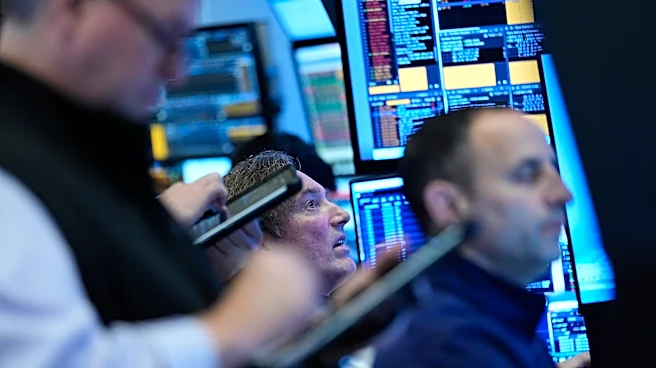
The sharp decline in CoreWeave's stock, alongside other major technology companies like Nvidia, highlights growing investor apprehension regarding the sustainability of the AI market boom and the financial health of companies within it. CoreWeave's substantial debt-to-market value ratio and escalating interest expenses underscore the financial risks associated with its business model, which relies on significant borrowing to fund its operations and a $133 billion revenue backlog. This situation could signal a broader re-evaluation of highly leveraged companies in the technology sector, particularly those in emerging and capital-intensive fields like AI. The market's reaction suggests that while demand for AI computing remains high, the cost of financing this demand is becoming a critical concern for investors, potentially impacting future investment in AI infrastructure.
What's Next?
CoreWeave is scheduled to report its fourth-quarter 2026 results in February 2027, which will provide further details on its interest expenses and overall financial performance. This report will be closely watched by investors for indications of how the company is managing its debt and financing costs in the current market environment. The ongoing volatility in AI stocks suggests that CoreWeave and similar companies may continue to face headwinds as investors weigh the demand for AI computing against the costs of funding it. The performance of the broader AI sector, including the stability of other major players, will also influence CoreWeave's trajectory. Investors will be looking for signs of stabilization in the AI market and clearer strategies from CoreWeave to manage its financial obligations.
Beyond the Headlines
The situation with CoreWeave reflects a deeper market sentiment concerning potential 'AI bubble' fears. The rapid growth and high valuations of AI companies have led to comparisons with past tech bubbles, raising questions about the long-term viability of some business models. CoreWeave's reliance on substantial debt to finance its operations, despite a large revenue backlog, illustrates a common challenge for high-growth, capital-intensive industries. This scenario could prompt a shift in investment strategies, favoring companies with stronger balance sheets and more sustainable growth models. It also highlights the intricate relationship between technological innovation, market speculation, and financial stability, suggesting that even in high-demand sectors, fundamental financial metrics remain crucial for investor confidence.