







What's Happening?
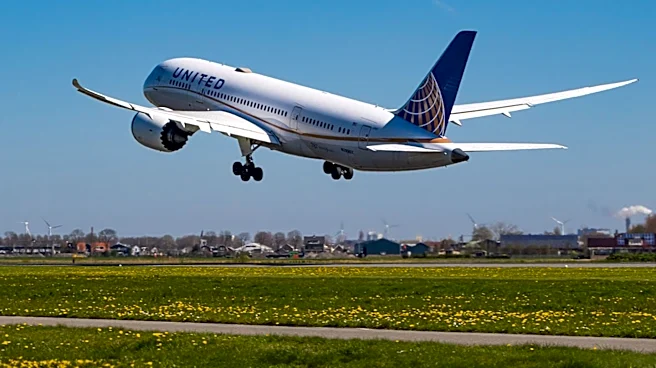
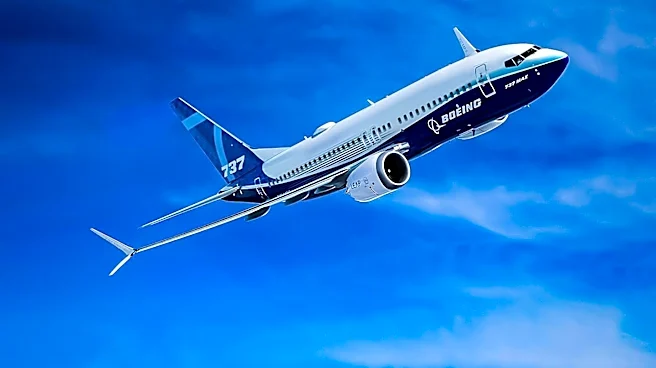
United Airlines CEO Scott Kirby has made a significant accusation, claiming that Boeing and Airbus have quietly agreed not to develop new aircraft. Kirby suggests that this alleged collusion stems from a lack of sufficient competition, which removes the
incentive for either manufacturer to innovate and produce new models. This statement reflects Kirby's frustration with the slow pace of aircraft development within the industry. The editor of Live and Let's Fly, Matthew Klint, acknowledged Kirby's frustration but also pointed out that this is a substantial allegation and that Kirby's argument might overlook certain factors, such as an aircraft his own airline has ordered and competition concerns he dismisses in other contexts, like airline mergers. The discussion also touched upon the current limitations in engine technology and workforce shortages affecting production.
Why It's Important?
Kirby's accusation of collusion between Boeing and Airbus, the two dominant players in the commercial aircraft manufacturing sector, is a serious claim that could trigger antitrust investigations and have far-reaching implications for the U.S. and global aviation industries. If proven, such an agreement would stifle innovation, limit choices for airlines, and potentially lead to higher costs for new aircraft, ultimately affecting ticket prices for consumers. It also highlights a perceived lack of competition in a critical sector of the global economy. The slow pace of aircraft development, as noted by Kirby, can hinder airlines' abilities to modernize their fleets, improve fuel efficiency, and adapt to evolving market demands, impacting their operational costs and environmental goals.
What's Next?
The allegations made by United Airlines CEO Scott Kirby are likely to attract the attention of regulatory bodies, such as the Department of Justice and the Federal Trade Commission, which could initiate investigations into potential anti-competitive practices by Boeing and Airbus. These investigations could lead to significant legal challenges, fines, or mandated changes in business practices for the manufacturers. The aviation industry, including other airlines and suppliers, will be closely watching for any official responses or actions. This situation could also reignite debates about market concentration and the need for greater competition in critical manufacturing sectors, potentially influencing future policy decisions regarding antitrust enforcement and industrial policy.
Beyond the Headlines
Kirby's comments shed light on the complex dynamics of a duopolistic market where two major players hold significant power. The alleged lack of incentive for new aircraft development could be a symptom of a mature industry facing high development costs, long lead times, and the challenges of achieving significant technological breakthroughs. The mention of workforce shortages and limitations in engine technology further complicates the picture, suggesting that even without collusion, there are inherent barriers to rapid innovation. This situation raises broader questions about the balance between fostering competition and allowing for the natural evolution of industries with high entry barriers. It also underscores the tension between airlines' desire for advanced, efficient aircraft and manufacturers' strategic decisions in a highly capital-intensive environment.