







What's Happening?
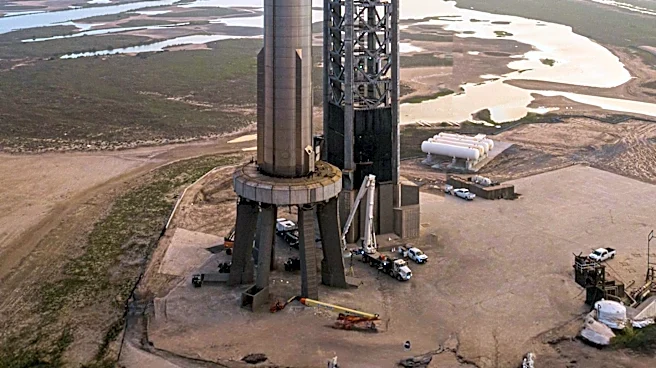
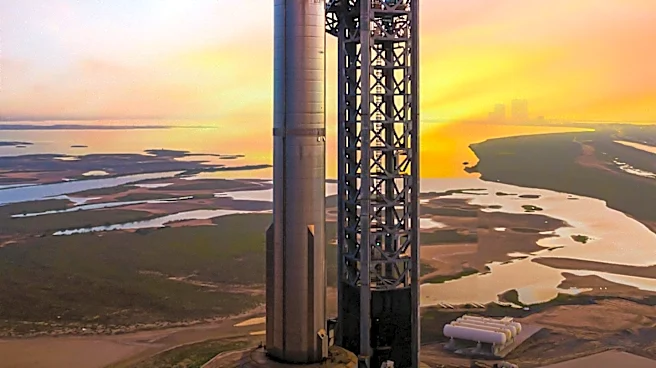
SpaceX has completed a static fire test of its Starship Super Heavy booster, preparing for the 13th test flight of the massive vehicle. The test involved igniting all 33 Raptor 3 engines on Booster 20 at SpaceX's Starbase facility in Texas. This marks
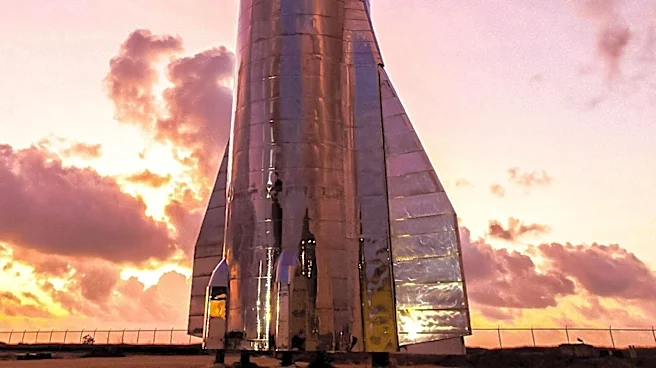
a significant step towards the upcoming launch, which could occur as early as July 15, according to the Federal Aviation Administration. The Starship V3 booster features enhanced avionics, a taller fuel tank, and equipment for propellant transfer, designed to support missions such as NASA's Artemis program. The successful test paves the way for further technology demonstrations and the eventual operational status of the Starship.
Why It's Important?
The successful static fire test of the Starship Super Heavy booster is crucial for SpaceX's plans to develop a fully reusable rocket capable of delivering over 100 tons to low Earth orbit. This capability is essential for future missions, including NASA's Artemis program, which aims to return humans to the moon. The advancements in Starship technology could revolutionize space travel, making it more cost-effective and frequent. SpaceX's progress in developing reusable rockets could also influence the aerospace industry, encouraging other companies to innovate and compete in the space exploration market.
What's Next?
SpaceX is expected to proceed with the 13th test flight of the Starship, focusing on demonstrating the vehicle's capabilities and addressing any issues encountered in previous tests. The company aims to achieve full operational status for the Starship, enabling it to support a variety of missions, including lunar landings and potential Mars colonization. As SpaceX continues to refine its technology, the success of these tests will be closely monitored by industry stakeholders and could impact future space exploration initiatives.