






What's Happening?
Chicago Bears President/CEO Kevin Warren offered an update on the team's efforts to build a new stadium during a preseason game broadcast. Warren emphasized the importance of building a 'world-class building' that prioritizes the fan experience. He stated
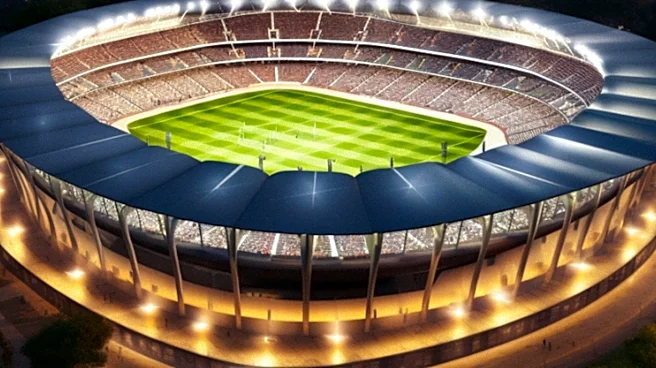
that the new stadium would be a fixed-roof facility capable of hosting not only sporting events like the Super Bowl and Final Four but also concerts and other major events. Warren also mentioned the support from the National Football League and the McCaskey family for the project. These comments follow a previous update from Chicago Bears Chairman George McCaskey regarding the stadium plans. The team has been exploring options for a new stadium for four years, aiming to move from Soldier Field.
Why It's Important?
The development of a new stadium for the Chicago Bears carries significant implications for the Chicagoland area and the team's long-term financial and operational future. A fixed-roof, world-class stadium could attract major national and international events, such as the Super Bowl and Final Four, bringing substantial economic benefits through tourism, job creation, and increased revenue for local businesses. For the Bears, a new stadium offers enhanced revenue streams through modern amenities, luxury suites, and year-round event hosting capabilities, which are crucial for remaining competitive in the NFL. The emphasis on a 'fan-centric' design suggests an effort to improve the game-day experience, potentially boosting attendance and fan engagement. However, the lack of concrete timelines or detailed plans raises questions about the project's progress and the tangible benefits for the community beyond high-profile events.
What's Next?
While President Warren's comments reiterated the team's commitment to a new stadium, specific next steps or a timeline for the project remain unclear. The team will likely need to provide more detailed plans regarding financing, location, and design to move forward. Stakeholders, including Illinois lawmakers, local government officials, and community groups, will be looking for concrete proposals and assurances regarding the project's impact and benefits. The mention of NFL support suggests potential financial or logistical backing from the league, which could be a critical factor in the project's realization. Further discussions and negotiations with various entities are anticipated as the Bears continue to pursue their goal of a new, state-of-the-art facility.
Beyond the Headlines
The ongoing stadium saga for the Chicago Bears highlights broader issues concerning public-private partnerships in sports infrastructure development. The team's desire for a 'world-class' venue capable of hosting major events often involves significant public investment or tax incentives, raising questions about the equitable distribution of costs and benefits. The rhetoric of putting 'fans at the center' while simultaneously seeking 'tax certainty' underscores the complex balance between community interests, team profitability, and political considerations. The long-term success of such a stadium hinges not just on its ability to attract marquee events but also on its integration into the urban fabric and its sustained economic contribution beyond game days. The lack of transparency and detailed plans could lead to public skepticism and prolonged negotiations, reflecting a common challenge in large-scale urban development projects involving professional sports franchises.