
What's Happening?
Freyja Grey has undertaken a years-long renovation of her nearly 200-year-old home in Thomaston, Maine, focusing on interior decoration with antiques and thrift finds to restore its spirit. When Grey and her partner
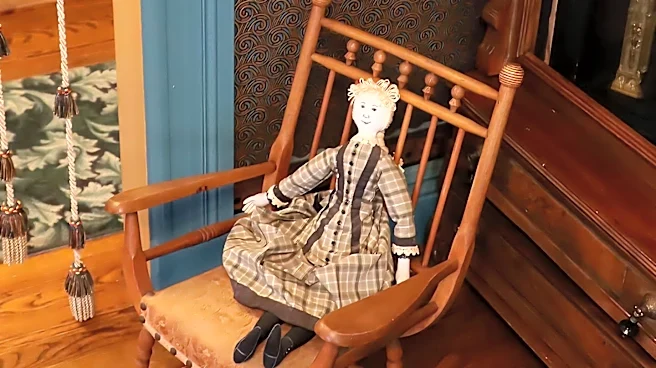
purchased the 1838 house, it lacked the hardwood floors and high ceilings she initially desired, and was filled with outdated decor like stained carpet and themed wallpaper. Instead of immediately renovating, Grey spent three years decorating and redecorating with secondhand items and antiques sourced from local shops and online marketplaces. This iterative process allowed her to discover what worked best for the historic home, which features uneven floors and walls. The kitchen underwent the most significant transformation, with all elements, including brick tile flooring, vintage copper drawer pulls, and light fixtures, acquired secondhand. The renovation aimed for timeless and sustainable choices, reflecting Maine's rich history of imports rather than limiting decor to typical coastal themes.
Why It's Important?
This story highlights a growing trend in sustainable living and interior design, emphasizing the value of restoration, reuse, and local sourcing over new construction and mass-produced items. For U.S. homeowners, particularly those with historic properties, Grey's approach offers a practical and aesthetically pleasing alternative to extensive, costly renovations. It demonstrates how thoughtful curation of secondhand goods can create a unique and character-filled home while also reducing environmental impact and supporting local economies through antique and thrift stores. The focus on sustainability and historical authenticity resonates with a demographic increasingly interested in eco-conscious choices and preserving architectural heritage. This method can also inspire others to view older homes not as burdens, but as opportunities for creative and meaningful restoration, potentially influencing real estate markets and design preferences in areas with a rich history.
What's Next?
Freyja Grey's home renovation is nearing completion, with the final project, the kitchen backsplash, recently installed. While the major structural and decorative work is largely finished, the ongoing process of living in and refining a historic home suggests continuous minor adjustments and additions. Grey's experience may inspire others to adopt similar approaches to home restoration, potentially leading to increased demand for local antique dealers, thrift stores, and skilled craftspeople specializing in historical preservation. Her story could also contribute to a broader conversation about sustainable homeownership and the importance of preserving the character of older properties. As the home approaches its 200th birthday, its continued evolution through thoughtful decoration will likely remain a personal journey for Grey, reflecting her evolving aesthetic and commitment to its historical integrity.
Beyond the Headlines
Beyond the practical aspects of home renovation, Grey's story touches on the deeper connection between personal identity and living spaces, particularly in historic homes. Her decision to let the house 'reveal to me what worked and didn’t work' speaks to a respectful, almost collaborative, relationship with the structure itself. This approach contrasts with modern trends of rapid, often impersonal, home makeovers, suggesting a more mindful way of inhabiting and honoring a space with a long history. The narrative also subtly critiques the homogenization of interior design, advocating for a style that embraces individuality, local character, and the stories embedded in antique objects. By rejecting 'lobster pillows' and 'L.L. Bean coffee tables,' Grey champions a more nuanced understanding of Maine's cultural identity, one that acknowledges its global connections and diverse influences over centuries. This perspective encourages a richer, more authentic engagement with one's environment and heritage.