






What's Happening?
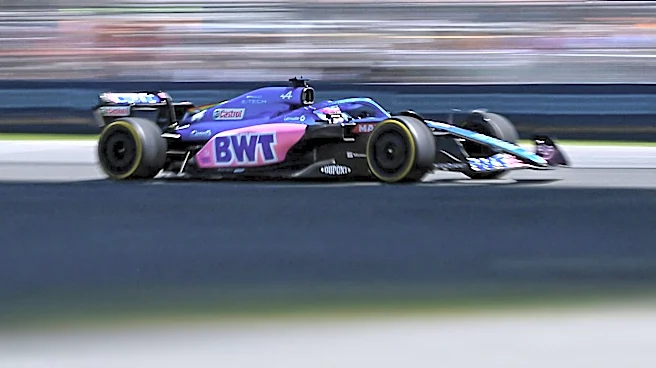
The Alpine Formula 1 team had its points from the Mexico City Grand Prix erased following two post-race stewards' decisions. Pierre Gasly received a stop-and-go penalty, converted to a 30-second time penalty, and two penalty points for failing to sufficiently
reduce speed in a double-yellow sector. This dropped him from 10th to 17th. His teammate, Franco Colapinto, was given a 10-second time penalty and one penalty point for not slowing enough in a single-yellow sector, moving him from eighth to 15th. Both drivers and the team argued they had slowed, but telemetry, in-car video, timing, and marshalling data reviewed by the stewards did not persuade them. These penalties resulted in Alpine, which initially had both cars in the points, finishing the race with zero points. The decisions also impacted the constructors' championship standings, widening the gap between Alpine and its rivals.
Why It's Important?
These penalties significantly impact Alpine's position in the constructors' championship, making their goal of securing fifth place a more distant prospect. The loss of points means a rival team, Racing Bulls, gains a larger lead, which could have financial implications for Alpine due to prize money distribution based on championship standings. The stewards' reliance on telemetry and comparison against other cars, rather than a published speed reduction threshold, sets a precedent for how yellow-flag compliance might be judged in the future. This could force teams to adopt more conservative strategies under yellow flags to avoid similar penalties, potentially affecting race dynamics and driver aggression. For drivers like Colapinto, accumulating penalty points brings him closer to the 12-point threshold for a one-race ban, highlighting the long-term consequences of such infringements on a driver's career.
What's Next?
Alpine has the right to appeal these decisions under Article 15 of the International Sporting Code. If an appeal is lodged, the focus of the argument for Colapinto's case would likely center on the distinction between double-yellow and single-yellow sectors and whether he received adequate warning. The outcome of any potential appeal could further alter the championship standings. Teams will likely scrutinize the stewards' methodology for assessing speed reduction under yellow flags, potentially leading to clearer guidelines or more robust internal protocols for drivers to avoid similar penalties in future races. The accumulation of penalty points for drivers like Colapinto will be closely monitored, as further infringements could lead to a race ban.
Beyond the Headlines
The incident highlights a broader issue within Formula 1 regarding the interpretation and enforcement of safety regulations, particularly under yellow-flag conditions. The lack of a published speed reduction threshold, as noted by the stewards comparing Gasly's telemetry against other cars, introduces an element of subjectivity that can be contentious for teams. This could lead to calls for more explicit and quantifiable rules to ensure consistent application across all teams and drivers. The financial implications of losing points, especially in the competitive midfield, underscore how regulatory decisions can directly affect a team's economic viability and strategic planning. It also raises questions about the balance between ensuring driver safety and maintaining competitive racing, as overly cautious driving under yellow flags could impact the spectacle of the sport.