



What's Happening?
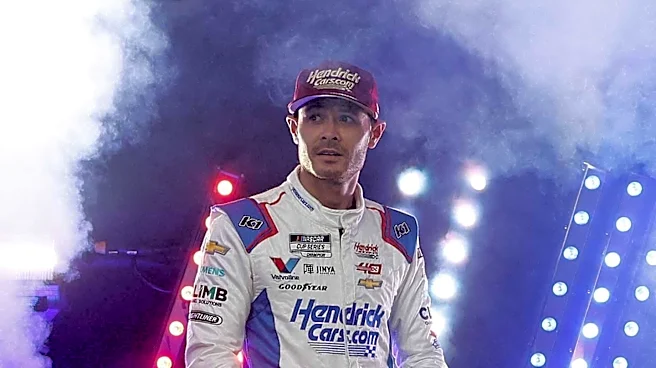
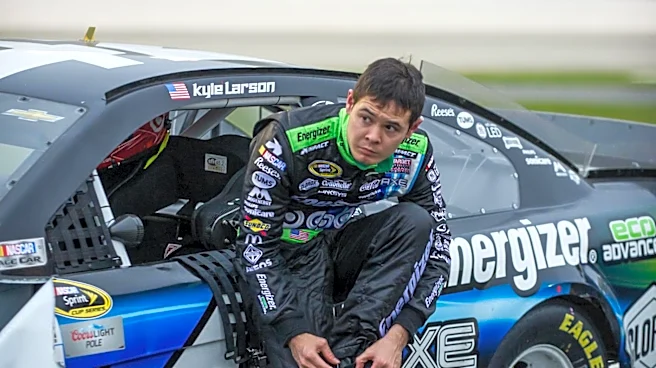
NASCAR driver Kyle Larson has suggested that the sport should bring in another Supercars driver to assess the unique dominance of Shane van Gisbergen on road courses. Van Gisbergen, who transitioned from Supercars, has become a formidable force in NASCAR's
road-course events, consistently outperforming seasoned drivers. His success began with a victory at the 2023 Chicago Street Race in his Cup Series debut and has continued into 2026 with wins at Watkins Glen and Sonoma, bringing his career Cup Series road-course victories to eight. Larson, speaking on the Apex Hunters United podcast, expressed his bewilderment at van Gisbergen's significant lead in these races, noting margins as large as 16 seconds. He questioned whether van Gisbergen's skill is exceptional or if Supercars drivers generally possess a superior technique for road courses, such as right-foot braking, which Larson admits he struggles with. Van Gisbergen's expertise stems from his background in Supercars, where he secured three Australian Supercars championships and three Bathurst 1000 titles.
Why It's Important?
Shane van Gisbergen's unparalleled success on NASCAR road courses is prompting a reevaluation of driver skill sets and potentially influencing future recruitment strategies within the sport. His consistent victories, often by substantial margins, challenge the established hierarchy of NASCAR's road-course specialists and highlight a potential gap in technique or experience among current drivers. If Larson's suggestion of bringing in another Supercars driver were to materialize, it could provide valuable insights into whether van Gisbergen's dominance is an individual anomaly or indicative of a broader advantage held by Supercars drivers on these types of tracks. This could lead to NASCAR teams investing more in specialized training for road-course racing or actively seeking talent from international touring car series. The situation also raises questions about the adaptability of NASCAR drivers to different racing disciplines and the potential for cross-series talent acquisition to reshape competition dynamics.
What's Next?
The discussion initiated by Kyle Larson could lead to increased scrutiny of NASCAR's road-course racing strategies and driver development programs. While there's no immediate indication of NASCAR actively recruiting another Supercars driver based solely on Larson's comments, the ongoing dominance of Shane van Gisbergen will likely keep the conversation alive. Teams and drivers may intensify their efforts to understand and adapt to the techniques van Gisbergen employs, such as right-foot braking and heel-and-toe downshifting, which are more common in Supercars. Future NASCAR road-course events will continue to be a proving ground, with all eyes on whether any driver can consistently challenge van Gisbergen. The performance of other international drivers who might enter NASCAR could also be closely watched as a benchmark against van Gisbergen's success, potentially influencing future talent scouting by NASCAR teams.
Beyond the Headlines
Shane van Gisbergen's impact extends beyond mere race wins; he is inadvertently sparking a cultural and technical exchange within motorsports. His success highlights the specialized skills honed in international touring car series like Supercars, which may not be as prevalent or emphasized in traditional NASCAR oval racing. This could lead to a broader appreciation within NASCAR for diverse driving techniques and a more globalized approach to driver development. The situation also underscores the ongoing debate about the 'best' way to race on road courses, potentially encouraging NASCAR to explore rule adjustments or car modifications that could either level the playing field or further embrace the unique challenges of road-course racing. Ultimately, van Gisbergen's presence is pushing NASCAR to evolve, challenging its drivers to expand their skill sets and potentially opening doors for more international talent to make their mark in American stock car racing.