


What's Happening?
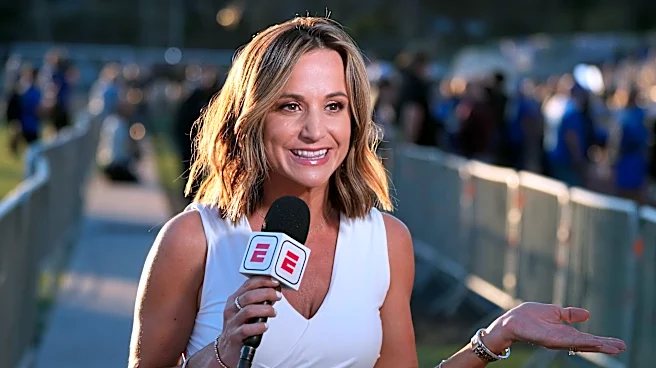
An investigation conducted by The Athletic has determined that former NFL reporter Dianna Russini did not comply with the company's journalistic standards due to her relationship with New England Patriots coach Mike Vrabel. This conclusion follows Russini's
resignation in April. While the report did not make definitive statements about the romantic nature of their relationship, it stated that the public photographs of Russini and Vrabel at a resort in Sedona, Arizona, were sufficient to establish a violation of company policy. The Athletic's executive editor, Steven Ginsberg, communicated to employees that the review aimed to ensure journalistic integrity and maintain audience trust. Mike Semel, editorial director for standards and quality, led the review, examining over 900 stories, 200 podcast episodes, and 70 videos by Russini. The review found that most of her work was unrelated to Vrabel and did not raise concerns, but editor's notes have been added to four specific pieces—one written story and three videos—that failed to meet the established standards. The photos in question were taken before the annual NFL meetings in Phoenix. Both Russini and Vrabel are married individuals. The NFL did not launch its own investigation into Vrabel's conduct.
Why It's Important?
This development underscores the critical importance of ethical conduct and transparency in sports journalism, particularly concerning relationships between reporters and subjects. The Athletic's decision to conduct a thorough internal review and publicly acknowledge violations, even after the reporter's resignation, reinforces the media organization's commitment to maintaining credibility and trust with its audience. For sports media, this incident highlights the potential for perceived conflicts of interest to undermine journalistic integrity, regardless of the actual nature of the relationship. It sets a precedent for how media outlets might address similar situations in the future, emphasizing the need for clear boundaries and disclosure. For athletes and coaches, it serves as a reminder of the scrutiny they face and the potential impact of their personal relationships on their professional standing and the organizations they represent. The incident also brings into focus the broader discussion around media ethics, the challenges of reporting on high-profile individuals, and the public's expectation of unbiased coverage.
What's Next?
Following the conclusion of The Athletic's review, editor's notes have been added to four of Dianna Russini's past works that did not meet the company's standards. Coach Mike Vrabel has stated he has 'moved on' and is focusing on the upcoming NFL season, indicating no further action is expected from him regarding this report. Russini, who resigned in April, maintains that she stands by her journalistic work and her initial resignation statement, which asserted her professionalism and dedication throughout her career. The Athletic's public stance on journalistic integrity may influence other media organizations to review or reinforce their own ethical guidelines for reporters covering sports figures. The incident could also lead to increased scrutiny of reporter-subject relationships across the sports media landscape, potentially prompting more explicit policies on disclosure and conflict of interest to prevent similar situations in the future. The long-term impact on Russini's career and public perception remains to be seen, as does any potential shift in how sports journalists interact with their sources.
Beyond the Headlines
The situation extends beyond a simple breach of company policy, touching upon the complex dynamics of professional relationships in high-stakes environments like professional sports. The emphasis on 'perceived' conflict of interest, even without a definitive conclusion on the romantic nature of the relationship, highlights the subjective yet powerful role of public perception in journalism. This incident could spark broader conversations within the media industry about the evolving nature of reporter-source interactions, especially in an era where social media and personal branding often blur professional lines. It also raises questions about the support systems available to journalists navigating such relationships and the clarity of ethical guidelines provided by their employers. The fact that the NFL did not investigate Vrabel's actions suggests a potential divergence in ethical standards or enforcement between sports organizations and media outlets. Ultimately, this event serves as a case study in the ongoing challenge of balancing access, trust, and journalistic independence in a highly scrutinized public sphere.