







What's Happening?
Concerns about an oversupply in the oil market are considered premature, according to analyst Mukesh Sahdev. The narrative of a supply glut has been challenged by the resilience of demand, which has been underestimated by the market. The situation is
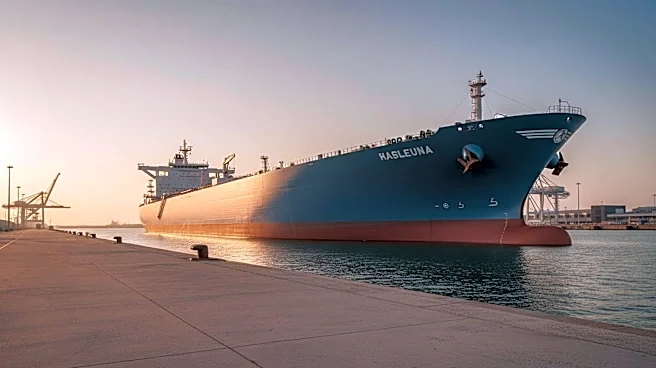
further complicated by geopolitical factors, such as the Strait of Hormuz, which has shifted from a major transit route to a more restrictive passage, contributing to market volatility. Sahdev suggests that the current market dynamics do not support the notion of an oversupply, and high volatility is expected to persist in the near term.
Why It's Important?
The analysis provided by Sahdev highlights the complexities of the global oil market, where supply and demand dynamics are influenced by a range of factors, including geopolitical tensions and transportation routes. The Strait of Hormuz is a critical chokepoint for global oil shipments, and any disruptions can have significant implications for oil prices and market stability. The resilience of demand, despite these challenges, suggests that the market may not be as oversupplied as previously thought. This has implications for oil producers, consumers, and policymakers, as they navigate the uncertainties of the energy market.
What's Next?
As the situation in the oil market continues to evolve, stakeholders will be closely monitoring developments in the Strait of Hormuz and other key regions. Any changes in geopolitical tensions or transportation routes could impact supply and demand dynamics, influencing oil prices and market stability. Policymakers and industry leaders may need to consider strategies to mitigate the impact of volatility and ensure a stable supply of oil. Additionally, ongoing analysis of demand trends will be crucial in assessing the true state of the market and making informed decisions.