


What's Happening?
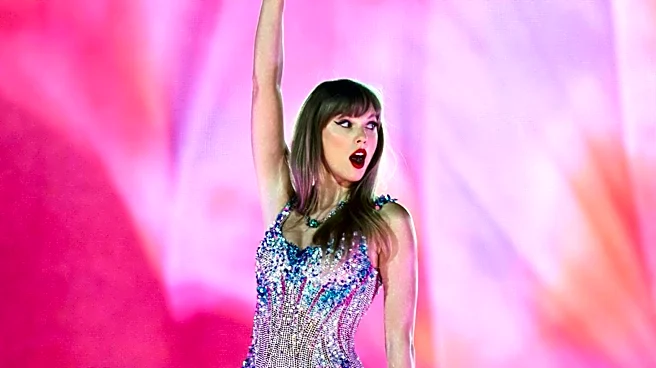
Following a critical profile of Taylor Swift titled 'The Mastermind' by May Jeong in Vanity Fair, several of Swift's A-list friends, including Julia Roberts and Brad Pitt, are reportedly reconsidering their engagement with the magazine. According to sources
cited by Rob Shuter's Naughty But Nice, these celebrities, who recently attended Swift's wedding to Travis Kelce, are hesitant to appear in Vanity Fair or at its associated events. The concern is that posing for the magazine would make them appear disloyal to Swift, especially after celebrating alongside her. Insiders suggest that these celebrities are conscious of their public image and wish to avoid any perception of hypocrisy or betrayal.
Why It's Important?
This development highlights the significant influence of celebrity networks and the potential repercussions for media outlets that publish content perceived as negative towards powerful figures. Vanity Fair, which has historically relied on access to Hollywood's biggest names, could face challenges in securing future collaborations with A-list talent. The reported distancing of stars like Julia Roberts and Brad Pitt from the magazine underscores the solidarity within celebrity circles and the potential for collective action to impact media relationships. This situation could set a precedent for how celebrities respond to critical media coverage, potentially leading to a more cautious approach from publications when profiling influential figures.
What's Next?
The immediate consequence for Vanity Fair could be a strained relationship with a segment of Hollywood's elite, potentially affecting its ability to secure high-profile interviews, cover stories, and event attendance. This could lead to a shift in editorial strategy or a more careful consideration of how celebrity profiles are framed. For Taylor Swift, this show of support from her friends reinforces her standing within the entertainment industry and demonstrates the loyalty she commands. The incident may also encourage other celebrities to be more vocal or strategic in their responses to media portrayals, potentially leading to a more complex dynamic between public figures and the press.
Beyond the Headlines
This situation delves into the intricate power dynamics between celebrities, media, and public perception. It reveals how personal relationships within the entertainment industry can translate into collective action, impacting the business operations of major publications. The concept of 'loyalty' among A-list friends, particularly in the context of a perceived 'attack' by the media, underscores the importance of image management and reputation in Hollywood. It also raises questions about journalistic independence versus the need for access, and how these competing interests shape the content that reaches the public. The incident could signify a broader trend where celebrities exert more control over their narratives and those of their associates.