






What's Happening?
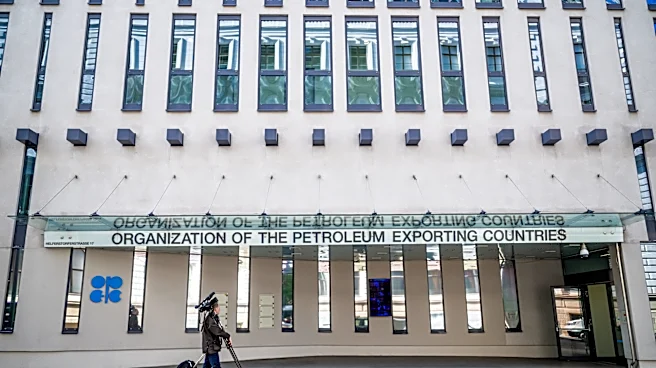
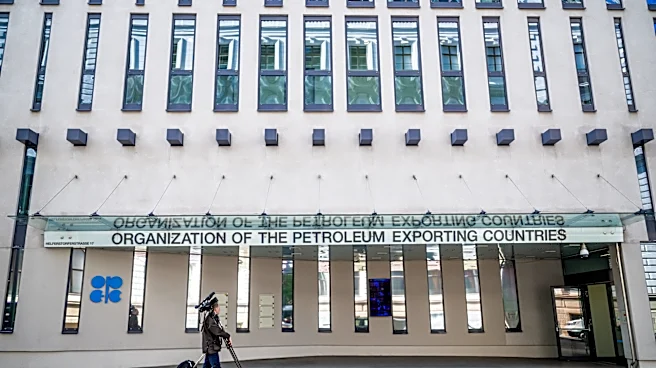
OPEC+ ministers are scheduled to meet on Sunday, November 29, to establish production baselines for 2027. This crucial meeting comes as the group's current output framework is set to expire on December 31, 2026, with no authorized agreement beyond that
date. A significant development for this session is the introduction of an independently verified capacity audit, the first of its kind for OPEC+. This audit, conducted by Dallas-based consultancy DeGolyer and MacNaughton for 19 of the 22 participating countries, aims to replace self-reported output data with independently assessed maximum sustainable capacity figures as the basis for future production allocations. Russia and Venezuela are being assessed separately, while Iran's baseline will be determined by its average output from August to October 2026. The meeting will also address approximately 2 million barrels per day in production cuts from 2022 that are slated to expire at year-end. The outcome is critical as failure to reach an agreement could lead to a scenario where each member produces at will, reminiscent of the 2020 Saudi-Russia price war.
Why It's Important?
The upcoming OPEC+ meeting holds significant implications for global oil markets and the U.S. economy. The shift to independently verified production capacity figures represents a structural change that could alter the balance of power within the group and influence global oil supply stability. If the audit reveals limited spare capacity outside of Saudi Arabia, as some analysts predict, it would formalize Saudi Arabia's structural leverage within OPEC+. A failure to agree on new quotas could lead to uncontrolled production increases, potentially flooding the market and driving down oil prices, which would impact U.S. energy producers. Conversely, a disciplined agreement could help stabilize prices, affecting U.S. consumer costs for fuel and energy-dependent industries. The meeting's decisions will also influence investment strategies in the U.S. energy sector, as companies assess future price stability and supply dynamics.
What's Next?
The immediate next step is the November 29 meeting, where ministers will review the capacity audit findings and attempt to agree on 2027 production baselines. Key discussions will likely revolve around Saudi Arabia's preferred baseline, Iraq's request for a 6 million barrels per day baseline (significantly above its current quota and estimated capacity), and Russia's capacity, which the IEA estimates to be below its current quota. If an agreement is not reached, the market faces uncertainty with no authorized output framework after December 31, 2026, potentially leading to a free-for-all production scenario. The market will closely watch for any indications of consensus or discord, as these will directly impact crude oil prices. Major forecasting houses like Goldman Sachs, Morgan Stanley, and the EIA have projected Brent crude prices for 2027, with some anticipating a significant oversupply, making the OPEC+ decision crucial for market stability.
Beyond the Headlines
The introduction of independently verified capacity audits marks a profound shift in OPEC+'s operational transparency and accountability. This move aims to mitigate historical issues of members inflating self-reported figures, which has often led to internal disputes and compliance challenges. The audit could expose discrepancies between stated and actual production capabilities, particularly for countries like Iraq, which has historically overproduced relative to its quota, and Russia, whose estimated capacity may fall short of its allocated output. This increased transparency could lead to greater internal discipline but also potentially exacerbate tensions if members feel their true capacities are not adequately reflected in their quotas. The departure of the UAE and Angola from OPEC in recent years, both driven by quota disputes, underscores the fragility of the alliance when perceived inequities arise. The November 29 decisions will test the group's ability to adapt to a more data-driven allocation system while maintaining unity and market influence.