






What's Happening?
The General Office of the Xinxiang Municipal People’s Government has released an 'Action Plan for Xinxiang to Foster and Strengthen Strategic Emerging Industries and Make Forward-Looking Arrangements for Future Industries.' This comprehensive plan systematically
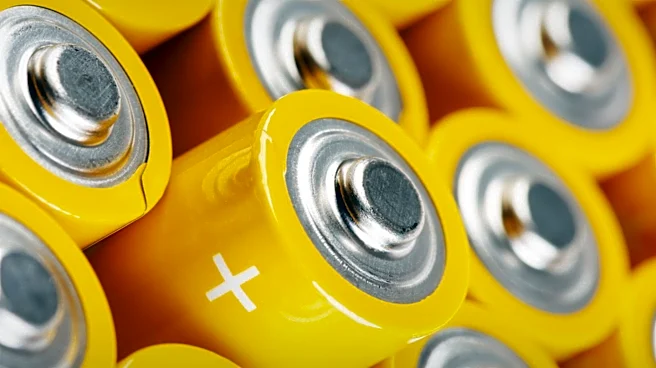
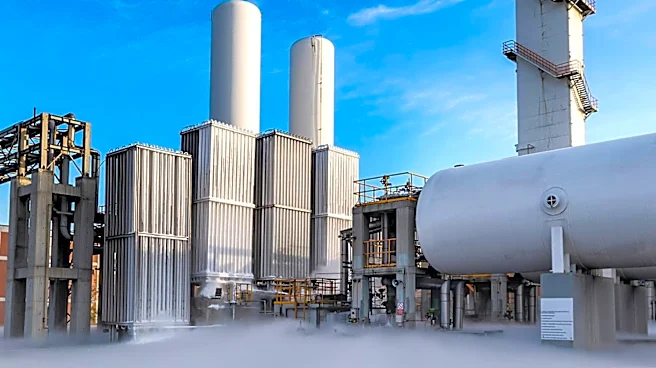
organizes the city's efforts to cultivate and reinforce strategic emerging industries, with a particular emphasis on hydrogen energy and new-type energy storage. The document identifies these two areas as key directions for future leading industries. The plan aims to accelerate breakthroughs in critical technologies, including hydrogen energy equipment, hydrogen fuel cell stacks, key materials and parts, and power system integration. A core objective is to establish an industrial collaborative development system encompassing 'hydrogen production — hydrogen storage — hydrogen refueling — hydrogen consumption.' Additionally, the plan seeks to strengthen the application of hydrogen fuel cells and build a diversified, complementary, safe, and efficient energy storage system by focusing on multiple technology routes such as electrochemical, electromagnetic, and hydrogen energy storage. The expansion of demonstration application scenarios for new-type energy storage will also be accelerated.
Why It's Important?
This action plan is significant as it signals a strategic commitment from a major municipal government to invest heavily in hydrogen energy and advanced energy storage. For the U.S. and global energy markets, such initiatives in China can drive innovation and economies of scale, potentially lowering the cost of hydrogen technologies worldwide. The focus on a complete 'production-to-consumption' ecosystem for hydrogen indicates a long-term vision for integrating hydrogen into the energy mix, which could influence international standards and supply chains. U.S. companies involved in hydrogen production, storage, fuel cell manufacturing, and energy storage solutions may find new opportunities for collaboration or competition as these technologies mature and become more widely adopted. The plan's emphasis on R&D and application demonstrations could also accelerate the global transition towards cleaner energy sources, impacting energy policy and investment decisions in the U.S. and beyond.
What's Next?
The action plan sets ambitious development targets, aiming for an average annual growth of over 11% in the added value of strategic emerging industries by 2027. By this time, the share of these industries in the added value of industrial enterprises above designated size is expected to exceed 23%. The city plans to establish approximately 15 provincial-level or above innovation platforms and achieve 15 cutting-edge leading technologies and key core technologies. Efforts will also be made to cultivate enterprises with leading capabilities in the industrial ecosystem and create 8 typical application scenarios. Furthermore, Xinxiang intends to establish at least one provincial-level or above strategic emerging industry cluster, advanced manufacturing cluster, and small and medium-sized enterprise distinctive industry cluster. The Municipal National Development and Reform Commission (NDRC), the Bureau of Industry and Information Technology, and the Bureau of Science and Technology will coordinate the plan's implementation, increase fiscal funding, and support universities in establishing future technology colleges.
Beyond the Headlines
The Xinxiang action plan reflects a broader global trend of governments recognizing the strategic importance of hydrogen and advanced energy storage in achieving energy independence and decarbonization goals. This localized initiative in China could serve as a model for other regions, demonstrating how integrated policy frameworks can foster the growth of nascent industries. The emphasis on a 'production-storage-refueling-consumption' system highlights the complex infrastructure development required for a hydrogen economy, which involves significant capital investment and technological coordination. The plan's success could lead to a competitive advantage for Chinese industries in these sectors, potentially influencing global market dynamics and technological leadership. It also underscores the ethical considerations of resource allocation and environmental impact as new energy technologies are scaled up, particularly concerning the sourcing of materials and the energy intensity of hydrogen production.