




What's Happening?
Fisker Inc. and its U.S. subsidiaries initiated voluntary Chapter 11 bankruptcy proceedings in June 2024, leading to the cessation of its operations. This development has significant repercussions for existing Fisker vehicle owners, as factory warranty
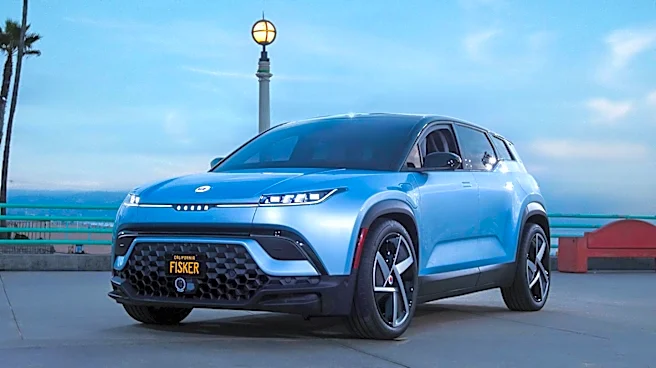
support has ended, and there is no longer an official dealer support network. Furthermore, the availability of replacement parts for Fisker vehicles is now significantly complicated. The company, co-founded by Henrik Fisker and Geeta Gupta-Fisker in 2016, had developed the Fisker Ocean electric SUV. This bankruptcy filing follows substantial financial and operational difficulties encountered by the company's electric vehicle business. The challenges faced by Fisker Inc. highlight the complex realities of automobile manufacturing, financing, supply chains, engineering, regulatory requirements, and scaling production in the competitive automotive industry.
Why It's Important?
The bankruptcy of Fisker Inc. underscores the inherent challenges and high stakes involved in the electric vehicle (EV) manufacturing sector, particularly for newer entrants. This event impacts not only the company's employees and investors but also its customer base, who now face uncertainty regarding vehicle maintenance, repairs, and long-term support. The cessation of warranty support and the lack of a dealer network could lead to increased costs for owners and potentially diminish the resale value of Fisker vehicles. This situation serves as a cautionary tale for the broader automotive industry, illustrating that innovative design alone is insufficient for sustained success without robust financial backing, efficient production capabilities, and a comprehensive after-sales support infrastructure. It also highlights the intense competition and capital-intensive nature of bringing new automotive products to market, especially in the rapidly evolving EV landscape.
What's Next?
Following the Chapter 11 bankruptcy filing, the immediate next steps for Fisker Inc. will involve navigating the legal and financial processes associated with liquidation or restructuring, though the cessation of operations suggests the former. For current Fisker vehicle owners, the focus will shift to independent repair options and sourcing parts from third-party suppliers, which may prove challenging and costly. The termination of the manufacturing agreement with Magna International, a key partner in the production of the Fisker Ocean, further solidifies the company's operational shutdown. The broader EV market may see increased scrutiny on the financial viability and long-term sustainability of other emerging EV manufacturers. This event could also influence investor confidence in new automotive startups, potentially leading to more cautious investment strategies in the sector.
Beyond the Headlines
The collapse of Fisker Inc. extends beyond a typical business failure, touching upon the broader narrative of innovation meeting real-world constraints in the automotive industry. It highlights the critical distinction between conceptual design and the complex execution required for mass production and market sustainability. The company's struggles illustrate that even with an attractive product concept like the Fisker Ocean, success hinges on dependable suppliers, adequate financing, manufacturing capacity, software reliability, regulatory compliance, and robust customer support. This case serves as a significant lesson for entrepreneurs in technology-heavy product businesses, emphasizing that innovation must be coupled with meticulous operational planning, cost management, and a scalable business infrastructure. It also raises questions about consumer protection in a rapidly evolving market where new companies emerge with promising technologies but may lack the long-term stability of established players.