





What's Happening?
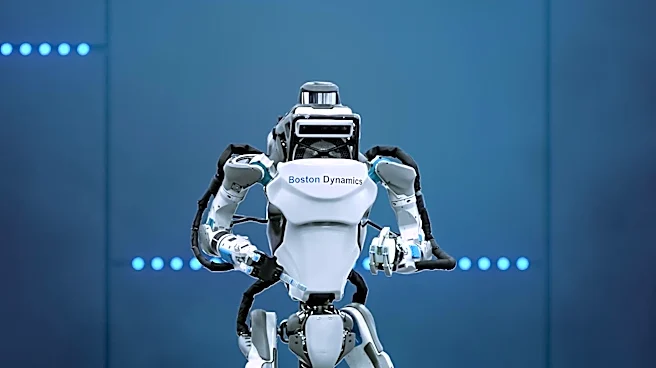
Boston Dynamics, a robotics subsidiary of Hyundai Motor Group, has announced a partnership with chipmaker GlobalFoundries (GF) to begin field testing its Atlas humanoid robot and expand the deployment of its four-legged robot, Spot. This collaboration
marks GlobalFoundries as the first customer outside the automotive industry to evaluate Atlas and the first semiconductor manufacturer to field-test a humanoid robot. The initial field tests for Atlas are scheduled to commence in early 2027 at key GlobalFoundries sites. The companies will work together to identify potential applications within semiconductor manufacturing, assess operational requirements, and conduct initial testing and training for specific tasks. Additionally, GlobalFoundries will deploy Spot robots across its global chip manufacturing facilities, including locations in New York and Vermont in the United States, Dresden in Germany, and Singapore. Spot robots have already been in use at GlobalFoundries' Vermont facility for over four years and recently expanded to Singapore, where two Spot robots have performed over 90,000 inspections with a 99% mission success rate since April.
Why It's Important?
This partnership signifies a significant step towards integrating advanced robotics into the critical semiconductor manufacturing sector. The deployment of Atlas and Spot robots could lead to enhanced efficiency, precision, and safety in chip production, which is vital for various U.S. industries reliant on semiconductors, including technology, automotive, and defense. By automating inspection and potentially other tasks, GlobalFoundries aims to improve operational consistency and reduce human exposure to hazardous environments within sub-fabs. The success of these robotic deployments could set a precedent for other U.S. chip manufacturers to adopt similar technologies, potentially bolstering domestic chip production capabilities and reducing reliance on foreign supply chains. This initiative also highlights the growing intersection of robotics and advanced manufacturing, indicating a future where autonomous systems play a more prominent role in high-tech industries.
What's Next?
Boston Dynamics will begin field tests for the Atlas humanoid robot at GlobalFoundries sites in early 2027. During this phase, the companies will focus on identifying specific applications for Atlas in semiconductor manufacturing, evaluating operational needs, and conducting initial training for the robots. GlobalFoundries plans to significantly increase the inspection workload for its Spot robots, aiming to more than double their current tasks by utilizing advanced visual inspection capabilities. Boston Dynamics is also establishing a training and validation base for Atlas at the Robotics Metaplant Application Center at Hyundai Motor Group Metaplant America (HMGMA) to prepare the robot for real-world automotive manufacturing tasks. The outcomes of these initial deployments and tests will likely influence the broader adoption of humanoid and quadruped robots in other industrial settings, particularly within the U.S. manufacturing landscape.
Beyond the Headlines
The integration of advanced robotics like Atlas and Spot into semiconductor manufacturing raises important considerations regarding the future of labor and industrial automation. While these robots promise increased efficiency and safety, their expanded roles could lead to shifts in workforce requirements, necessitating new training and skill development for human employees. The partnership also underscores the strategic importance of robotics in maintaining a competitive edge in high-tech manufacturing, particularly as nations strive for greater self-sufficiency in critical sectors like semiconductors. Furthermore, the data collected by these robots, such as inspection results and operational metrics, will contribute to a deeper understanding of manufacturing processes, potentially leading to further innovations in factory design and management. This collaboration could also influence regulatory frameworks concerning the use of autonomous systems in industrial environments, particularly in sensitive sectors like chip production.