




What's Happening?
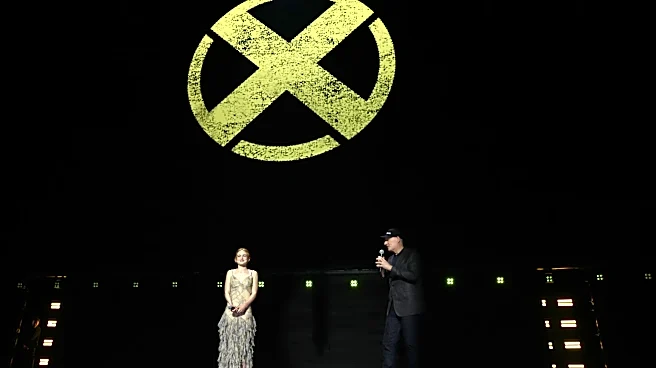
Marvel Studios is preparing for the release of 'Avengers: Doomsday' on December 18, 2026, which will integrate original X-Men characters into the Marvel Cinematic Universe. In anticipation of this event, the 2011 film 'X-Men: First Class' will be removed
from HBO Max on December 1. This move makes it more challenging for U.S. audiences to stream the movie, which is widely credited with revitalizing the X-Men franchise. 'X-Men: First Class' was released after a period where the X-Men series was perceived to be faltering, following 'X-Men: The Last Stand' (2006) and 'X-Men Origins: Wolverine' (2009). Directed by Matthew Vaughn, the prequel, set against the 1962 Cuban Missile Crisis, introduced a new cast including James McAvoy as Charles Xavier and Michael Fassbender as Erik Lehnsherr (Magneto). The film garnered critical acclaim and achieved a box office success of $353.6 million, paving the way for its highly praised sequel, 'X-Men: Days of Future Past' (2014).
Why It's Important?
The removal of 'X-Men: First Class' from HBO Max is significant for several reasons, particularly for Marvel fans and the streaming landscape in the U.S. As Marvel Studios prepares to merge the X-Men with the Avengers in 'Avengers: Doomsday,' access to foundational films like 'X-Men: First Class' becomes crucial for audiences to understand the characters' histories and appreciate their integration into the MCU. Limiting streaming availability could impact viewer engagement and the ability of new audiences to catch up on the X-Men saga. This situation also highlights the evolving nature of streaming rights and content availability, where popular films can frequently move between platforms or become temporarily inaccessible. For Marvel Studios, ensuring easy access to relevant past content could be a strategic move to build hype and context for upcoming releases, and its removal might be a precursor to its availability on Disney+, Marvel's proprietary streaming service, though the source does not confirm this. The film's historical success in revitalizing the X-Men franchise underscores its importance in the broader superhero cinematic universe.
What's Next?
With 'X-Men: First Class' departing HBO Max on December 1, U.S. audiences will have a limited window to stream the film before its removal. This change occurs just weeks before the highly anticipated release of 'Avengers: Doomsday' on December 18, 2026, which will feature the original X-Men characters alongside the Avengers. While the cast of 'X-Men: First Class' is not expected to appear in 'Avengers: Doomsday,' the film's historical significance to the X-Men franchise makes its accessibility relevant for fans. The removal from HBO Max could indicate a future shift in its streaming home, potentially to Disney+, given Marvel Studios' ownership by Disney, though no official announcement has been made regarding its next streaming destination. Viewers interested in revisiting the film or experiencing it for the first time will need to do so before the December 1 deadline, or seek alternative viewing methods such as digital purchase or physical media.
Beyond the Headlines
The impending removal of 'X-Men: First Class' from HBO Max, particularly in the lead-up to a major MCU crossover event, underscores broader trends in content ownership and distribution within the entertainment industry. As major studios consolidate their intellectual properties and launch their own streaming platforms, the availability of popular films can become fragmented across various services. This often leads to a less unified viewing experience for consumers, who may need to subscribe to multiple platforms or purchase individual titles to access their desired content. For Marvel Studios, this move could be part of a strategy to centralize its vast catalog on Disney+, thereby enhancing the value proposition of its own streaming service and creating a more cohesive narrative experience for the MCU. However, it also raises questions about consumer access and the potential for 'superhero fatigue' if audiences find it increasingly difficult to follow complex cinematic universes due to shifting content availability. The decision reflects the ongoing battle for streaming dominance and the strategic use of content libraries to attract and retain subscribers.