


What's Happening?
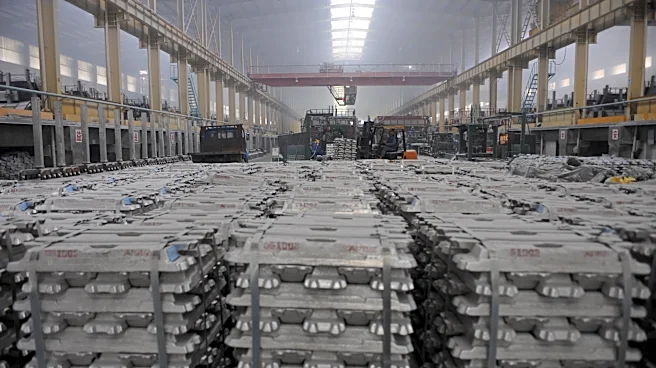
Rio Tinto has announced the restart of Line 4 at its Tiwai Point aluminum smelter in New Zealand, following a 50 MW electricity contract with Contact Energy. This agreement, spanning three-and-a-half years, will enable the aluminum production line, idled
since April 2020 due to the COVID-19 pandemic, to resume operations. Once fully operational by December 2027, Line 4 is projected to increase the smelter's aluminum production capacity by approximately 30,000 tonnes per year, restoring the total site capacity to 360,000 tonnes per year. This expansion represents about a 3% increase in smelting capacity across Rio Tinto's Australian and New Zealand operations. Armando Torres, Rio Tinto aluminum Pacific operations MD, highlighted the growing demand for high-quality, low-carbon aluminum as a key driver for this decision.
Why It's Important?
The restart of Line 4 is significant for both Rio Tinto and New Zealand's economy. For Rio Tinto, it signifies a strategic move to capitalize on the increasing global demand for low-carbon aluminum, reinforcing its commitment to its New Zealand operations as a vital part of its integrated global aluminum network. The additional production capacity will allow the company to meet market needs more effectively. For New Zealand, this development is expected to generate an estimated NZ$100 million in additional export revenue annually, based on current global spot aluminum prices. This economic boost will support the local industry and contribute to the nation's trade balance. The long-term power purchase agreement being pursued with Contact Energy also suggests a stable and sustained economic benefit for the region, providing job security and continued industrial activity.
What's Next?
The immediate next step involves bringing Line 4 back into production, with full operational capacity anticipated by December 2027. Rio Tinto and Contact Energy are also working towards developing a longer-term power purchase agreement, which could potentially ensure Line 4 operates for the next two decades. This long-term agreement would solidify the future of the Tiwai Point smelter and its contribution to New Zealand's economy. The increased production will allow Rio Tinto to further address the rising global demand for low-carbon aluminum, potentially influencing market dynamics and pricing in the aluminum sector. Stakeholders will be observing the progress of the long-term power agreement and the smelter's impact on New Zealand's export figures.
Beyond the Headlines
The decision to restart Line 4 underscores a broader trend in the industrial sector: the increasing emphasis on low-carbon production. As global industries strive to reduce their carbon footprint, the demand for sustainably produced materials like low-carbon aluminum is on the rise. This move by Rio Tinto not only addresses market demand but also positions the company favorably in a competitive landscape where environmental considerations are becoming paramount. The long-term commitment to the Tiwai Point smelter, contingent on a stable power supply, highlights the critical role of energy infrastructure in supporting industrial growth and sustainability. This development could serve as a model for other industries looking to reactivate idled assets while aligning with environmental goals and securing long-term energy partnerships.