




What's Happening?
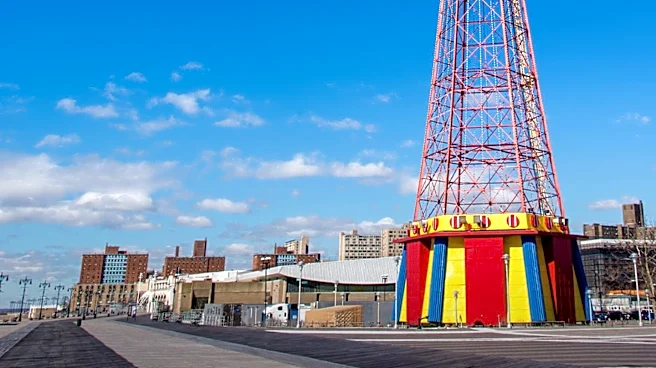
New York City's Parks Department has initiated a bidding process to find a new operator for the iconic Coney Island Cyclone roller coaster and the Parachute Jump. This opportunity comes as the Cyclone approaches its 100th birthday in 2027. The winning
bidder will secure a two-decade contract to run these beachfront amusement attractions. Despite its landmark status, the Cyclone has experienced financial losses in recent years, with its previous operator, Central Amusement International, reporting a $330,000 loss between 2022 and 2025. The new concessionaire will be responsible for significant capital investments to maintain the aging wooden roller coaster, including continuous upkeep of bracing, brakes, and safety equipment, as well as mandatory upgrades like ADA-compliant ticket booths, new entrance gates, LED lighting conversion, and extensive painting.
Why It's Important?
The search for a new operator for the Coney Island Cyclone is crucial for preserving a significant piece of American cultural heritage and a key economic driver for the Coney Island neighborhood. The Cyclone is not just an amusement ride; it's a symbol of New York City and a major tourist attraction. Ensuring its continued operation and proper maintenance is vital for maintaining Coney Island's appeal as a recreational destination. The required capital investments highlight the challenges of preserving historic infrastructure while ensuring modern safety standards and operational viability. The success of this bid will impact local businesses, tourism revenue, and the overall revitalization efforts in Coney Island, including a planned $1 billion makeover for the Riegelmann Boardwalk and a new Business Improvement District.
What's Next?
The city is currently accepting bids for the operation of the Cyclone and Parachute Jump. Prospective operators must submit a comprehensive capital plan detailing how they will address the continuous maintenance and upgrade requirements of the 99-year-old wooden roller coaster. The winning bidder will also gain control of the defunct Parachute Jump, which can be used for revenue-generating personal messages, subject to city approval. The new concessionaire will have the option to develop new food spots, games, and rides in the vicinity, though the city has set maximum prices for certain food items. The outcome of this bidding process will determine the future management and investment in these historic attractions, directly influencing their operational longevity and contribution to Coney Island's ongoing development.
Beyond the Headlines
The bidding for the Coney Island Cyclone and Parachute Jump transcends a simple business transaction; it represents a complex interplay of historical preservation, urban development, and economic sustainability. The challenge lies in finding an operator willing to invest substantially in an aging, high-maintenance asset that has shown recent financial losses, while also respecting its iconic status. This situation reflects a broader trend in many historic urban amusement areas, where the romance of the past clashes with the realities of modern operational costs and safety regulations. The city's involvement in setting food prices and approving messages for the Parachute Jump indicates a desire to maintain a certain character and accessibility for the area, balancing commercial interests with public good. The future of these rides will be a testament to how well New York City can blend nostalgia with necessary modernization and financial prudence.