




What's Happening?
Chroma Studio has designed a small Milan apartment that integrates over 15 different colors to create a distinct identity without altering the original layout. Designers Giuseppe Albanese and Elga Ancona focused on using color, thresholds, materials,
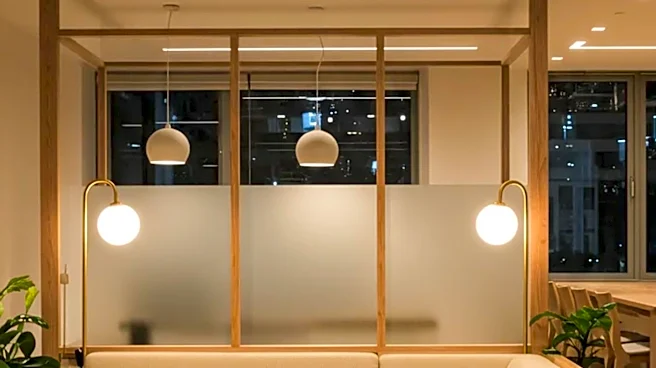
and bespoke elements as architectural tools. The design incorporates elements inspired by the owners' time in Paris, such as arched glass partitions, reinterpreted in a modern graphic style. Color blocking is used to create visual contrast, and colors are selected based on natural light, materials, room function, and their relationship to adjacent hues. Unique partitions and room dividers provide visual breaks and separation without extensive renovation, such as a yellow-framed glass partition between the dining room and kitchen. The project emphasizes color harmony and the interplay between different design elements to avoid saturation overload.
Why It's Important?
This design approach offers significant implications for urban living, particularly in densely populated areas where space is at a premium. By demonstrating how color and strategic partitioning can transform small apartments, Chroma Studio provides a blueprint for maximizing functionality and aesthetic appeal without costly structural changes. This is crucial for renters and homeowners in cities who seek personalized and vibrant living spaces but are constrained by size. The project challenges conventional notions of interior design by proving that a multitude of colors can coexist harmoniously, fostering a sense of individuality and creativity. This could inspire a broader trend in interior design, encouraging more experimental and personalized approaches to small-space living across the U.S. and internationally, impacting both design professionals and consumers.
What's Next?
The success of Chroma Studio's approach in Milan could lead to increased adoption of similar design philosophies in other urban centers. Interior designers and architects may draw inspiration from this project to develop innovative solutions for small apartments, focusing on color theory, modular furniture, and non-structural room dividers. We might see a rise in demand for bespoke elements and customized color palettes in residential design. Furthermore, the project's emphasis on creating a distinct identity through design, rather than extensive renovation, could influence real estate markets by highlighting the potential for aesthetic transformation in existing properties. This could also lead to new product developments in paints, finishes, and customizable partitions tailored for compact living spaces.
Beyond the Headlines
Beyond its aesthetic appeal, this project touches upon deeper psychological and cultural aspects of living. The deliberate use of color to define spaces and guide movement can significantly impact mood and perception within a home. The integration of personal history, such as the Parisian influences, into the design creates a narrative that makes the living space uniquely reflective of its inhabitants. This approach moves beyond mere decoration, transforming the apartment into a dynamic and evolving canvas that tells a story. It underscores the idea that a home is not just a physical structure but an extension of one's identity and experiences, fostering a sense of belonging and well-being in an increasingly globalized and transient world. This could influence how individuals view and interact with their living environments, promoting a more mindful and personalized approach to home design.