







What's Happening?
The Uyghur Forced Labor Prevention Act (UFLPA), effective since June 21, 2022, imposes a presumption that all goods produced in the Xinjiang Uyghur Autonomous Region are made with forced labor. This presumption requires importers to provide clear and
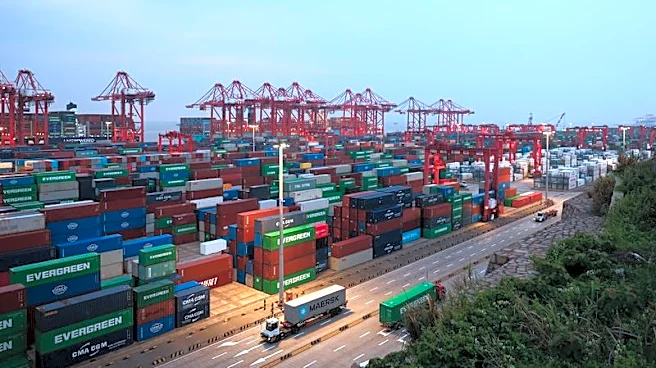
convincing evidence to the contrary to allow entry into the United States. The act has significantly impacted trade, particularly affecting goods from Ürümqi, a major logistics hub in Xinjiang. Despite the UFLPA, goods from Xinjiang continue to enter the U.S. market through third-party countries, highlighting enforcement challenges. The UFLPA Entity List, maintained by the U.S. government, names specific companies linked to forced labor practices, further complicating import processes.
Why It's Important?
The UFLPA represents a significant shift in U.S. trade policy, placing the burden of proof on importers to demonstrate the absence of forced labor in their supply chains. This has created substantial compliance challenges for businesses, particularly those dealing with goods from Xinjiang. The act aims to address human rights concerns but also poses economic implications for companies reliant on Xinjiang's exports. The high evidentiary bar and the risk of shipment detention at U.S. ports have led many companies to reconsider their sourcing strategies, potentially impacting global supply chains and trade dynamics.
What's Next?
As the UFLPA continues to be enforced, companies must enhance their supply chain transparency and compliance measures. The U.S. government may expand the UFLPA Entity List, increasing scrutiny on more companies. Businesses are likely to seek alternative sourcing regions to mitigate risks associated with Xinjiang-origin goods. Additionally, international markets, such as the EU, are developing similar regulations, indicating a broader global trend towards stricter forced labor enforcement. Companies must stay informed of regulatory changes and adapt their strategies accordingly.