





What's Happening?
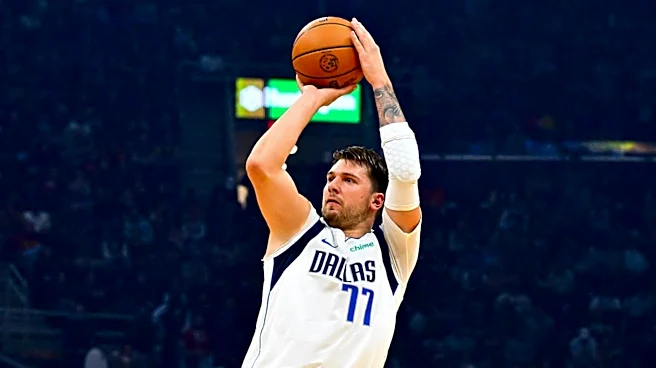
Dallas Mavericks Head Coach Jason Kidd has significantly influenced Luka Doncic's on-court role, leading to a more versatile, hybrid approach since the 2020-2021 season. Initially, Doncic was primarily a scoring point guard, leveraging his shooting, ball-handling,
and court vision. However, under Kidd's guidance, his role has evolved into what is best described as a 'point-forward' or a hybrid small forward/power forward. This shift emphasizes adaptability and player versatility, moving away from rigid traditional positions. Doncic's unique blend of speed, agility, quickness, strength, rebounding acumen, and shooting range allows him to excel in this multi-faceted role. He is currently the only player in the league averaging over 25 points, 7 rebounds, and 7 assists per game, highlighting his comprehensive impact. The Mavericks' lineup philosophy has adapted to maximize Doncic's strengths, making him the central hub of their system and a benchmark for successful hybrid lineups.
Why It's Important?
This evolution in Luka Doncic's role under Jason Kidd signifies a broader trend in modern NBA basketball, where traditional positional boundaries are blurring. The emphasis on hybrid roles and player versatility allows teams to create more dynamic and resilient rosters. For the Dallas Mavericks, this strategic adaptation has made them a more formidable contender, poised for future championships. The success of players like Doncic, Jayson Tatum, and Brandon Ingram in fluid roles challenges conventional coaching strategies and player development. It underscores the importance of identifying and leveraging individual strengths rather than adhering to rigid positional labels. This shift impacts how teams scout, draft, and train players, prioritizing adaptability and multiple skillsets. The Mavericks' approach, with Doncic at its core, demonstrates how embracing positional flexibility can lead to enhanced team performance and a more engaging style of play for fans.
What's Next?
The continued success of Luka Doncic in his hybrid role is likely to further solidify the trend of positional fluidity in the NBA. Other teams and coaches may increasingly adopt similar strategies, focusing on developing players with diverse skillsets rather than pigeonholing them into traditional positions. This could lead to a league-wide re-evaluation of player roles and team compositions. For the Mavericks, the ongoing development of Doncic within this versatile framework will be crucial for their championship aspirations. Future seasons will likely see further refinements to this hybrid system, potentially influencing how other star players are utilized across the league. The debate among basketball enthusiasts about the relevance of traditional positions will also continue, with Doncic serving as a prime example of the modern game's evolving nature.
Beyond the Headlines
The shift towards hybrid roles, exemplified by Luka Doncic under Jason Kidd's coaching, has deeper implications for the sport beyond immediate team performance. It challenges the very foundation of basketball analytics and player evaluation, which have historically relied on traditional positional statistics. This evolution could lead to the development of new metrics and analytical frameworks that better capture the value of versatile players. Culturally, it reflects a broader societal trend towards specialization and adaptability, where individuals are valued for their ability to perform multiple functions. Ethically, it raises questions about player development at younger ages, encouraging a more holistic approach to skill-building rather than early specialization. The long-term impact could be a more dynamic, unpredictable, and engaging sport, where strategic innovation and player adaptability are paramount, fundamentally altering how basketball is played and perceived.