






What's Happening?
Speediance, known for its Gym Monster smart home gym, has unveiled three new proprietary AI models—Votus, Oryn, and Somni—alongside AEVIS, a proactive AI agent designed to provide continuous training and recovery context. The company also announced new hardware,
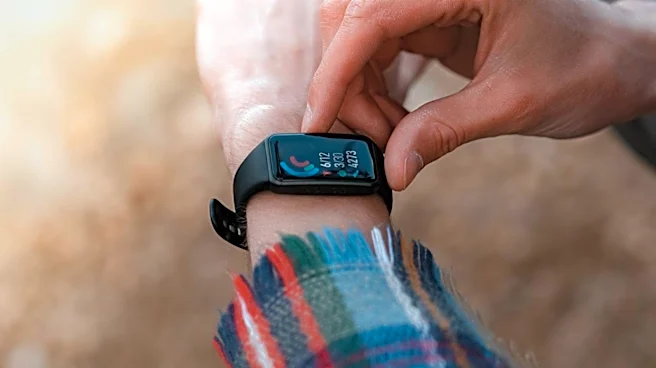
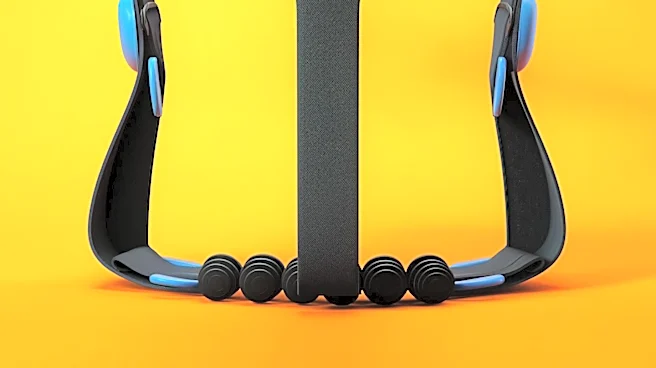
including Gym Monster 3, Gym Monster Ultra, Gym Nano, and the Speediance Strap, a screen-free recovery wearable. Votus is a movement-intelligence model that uses a phone camera to reconstruct and analyze exercise execution in 3D. Oryn is a foundation model that considers exercise, nutrition, and sleep to make training and recovery decisions. Somni, currently a technology preview, explores how different training and recovery choices might influence future states like fatigue and sleep. AEVIS integrates these models, maintaining a user's training history, physiological signals, sleep, nutrition, and daily schedule to inform recommendations, moving beyond the capabilities of typical fitness chatbots. This expansion signifies Speediance's ambition to evolve into a comprehensive, connected fitness system rather than solely a hardware provider.
Why It's Important?
This development is significant for the U.S. fitness technology market, indicating a shift towards more integrated and personalized home fitness solutions. By combining advanced AI with new hardware, Speediance aims to offer a holistic approach to training and recovery, potentially setting a new standard for smart home gyms. The emphasis on continuous context and personalized adjustments could enhance user engagement and adherence to fitness routines, addressing common challenges in at-home workouts. For consumers, this means access to more sophisticated guidance that adapts to their daily lives, including travel or changes in schedule, optimizing their fitness outcomes. For the industry, it highlights the growing role of AI in personal wellness, pushing competitors to innovate beyond basic workout tracking and towards comprehensive, adaptive systems. This could lead to increased investment in AI research and development within the fitness sector, fostering a more competitive and technologically advanced market.
What's Next?
Speediance plans to further integrate its AI systems with its physical hardware, aiming for what it calls 'embodied intelligence,' where the training equipment itself becomes a physical execution and feedback layer. While AEVIS does not currently autonomously control Gym Monster resistance, this deeper integration is part of the company's long-term roadmap. Future developments will likely focus on closing this gap, allowing the AI to directly influence the resistance and other functions of the Gym Monster devices. The company will also need to validate the effectiveness and accuracy of its AI models, particularly Somni, which is still a research preview. As these technologies mature, Speediance may seek partnerships with healthcare providers or expand its offerings to include more clinically validated health insights, though it currently emphasizes that its AI is not a medical device. The market will be watching to see how these ambitious plans translate into tangible user benefits and how they are received by a growing base of tech-savvy fitness enthusiasts.
Beyond the Headlines
The introduction of these advanced AI models raises deeper implications regarding data privacy and the ethical use of personal health information. As AEVIS collects extensive data on training history, physiological signals, sleep, nutrition, and daily schedules, ensuring the security and responsible handling of this sensitive information will be paramount. There's also a broader societal shift towards 'quantified self' and hyper-personalization in health and fitness, where AI-driven systems promise optimal outcomes but also necessitate a high degree of data sharing. The distinction between a 'rough guide' and a 'diagnosis,' particularly with models like Somni, highlights the ongoing challenge of managing user expectations and preventing the misinterpretation of AI-generated insights as medical advice. This trend could lead to increased regulatory scrutiny on fitness tech companies to clearly define the scope and limitations of their AI capabilities, fostering a more transparent and trustworthy ecosystem for digital health and wellness.