
What's Happening?
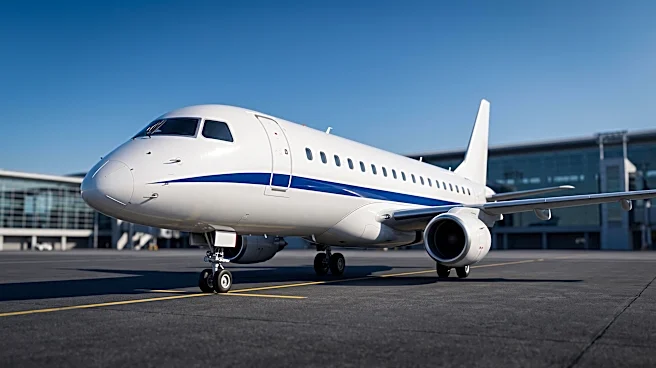
SkyWest Airlines is a major operator of the Embraer 175, a regional twin-engine jet that has become the backbone of U.S. regional aviation. The Embraer 175, known for its 2+2 seating layout and comfortable
cabin, connects smaller cities to major hubs across North America. SkyWest Airlines, along with Republic Airways, Envoy Air, and Horizon Air, operates these aircraft under brands like American Eagle, Delta Connection, United Express, and Alaska Airlines. The E175 entered commercial service in July 2005 and has since seen rapid adoption, with over 1,000 deliveries globally, making it one of the best-selling regional jets. Its design specifically adheres to U.S. pilot union scope clauses, which cap regional partner aircraft at 76 seats and approximately 86,000 lb maximum takeoff weight. This compliance has allowed the E175 to achieve an approximate 80% market share in the U.S. regional jet segment, making it the sole aircraft produced in its market segment as of 2024. The aircraft's operational history includes millions of flights, demonstrating its robustness and reliability.
Why It's Important?
The dominance of SkyWest Airlines and the Embraer 175 in the U.S. regional jet market significantly impacts air travel for millions of Americans. The E175's design, which prioritizes passenger comfort with its 2+2 seating and spacious cabin, has set a standard for regional flights, offering an experience closer to mainline jets. This is crucial for business travelers and frequent flyers who rely on these connections between secondary cities and major hubs. The aircraft's compliance with U.S. scope clauses has effectively shaped the regional aviation landscape, influencing fleet choices for major airlines and their regional partners. This ensures a consistent travel experience for passengers on regional routes. Furthermore, the E175's exceptional safety record, with zero fatal accidents and hull losses in scheduled passenger service, contributes to passenger confidence in regional air travel. The continued reliance on the first-generation E175, due to scope clause restrictions on its newer E2 variant, means this aircraft will remain a staple in U.S. regional aviation for the foreseeable future.
What's Next?
The Embraer 175 is expected to continue its dominant role in U.S. regional aviation for several years. The development of its successor, the E175-E2, has been paused until at least 2027 due to its inability to comply with current U.S. pilot union scope clauses regarding maximum takeoff weight. This means that major U.S. airlines and their regional partners, including SkyWest Airlines, will continue to operate the first-generation E175. Embraer is also exploring new markets, with plans to establish an E-175 final assembly line in India to support domestic demand and exports, indicating a broader global strategy for the aircraft. For U.S. travelers, this implies a consistent regional flight experience with the E175, characterized by its established comfort and safety features. Any future changes in pilot union contracts could potentially alter this landscape, but for now, the E175 remains the primary regional jet for connecting smaller U.S. cities to larger hubs.
Beyond the Headlines
The enduring dominance of the Embraer 175, largely driven by U.S. pilot union scope clauses, highlights a unique interplay between labor agreements and aircraft manufacturing. These clauses, designed to protect mainline pilot jobs, inadvertently dictate the types of aircraft regional carriers can operate, effectively creating a protected market for specific aircraft models like the E175. This situation has significant implications for technological innovation in regional aviation, as newer, more fuel-efficient models like the E175-E2 are sidelined. While ensuring job security for pilots, this dynamic also means that U.S. regional airlines may not be able to adopt the latest advancements in aircraft technology as quickly as their international counterparts. This creates a fascinating case study in how non-market forces, such as labor contracts, can profoundly influence industrial development and consumer experience within a critical sector like air travel. The long-term implications could include a slower adoption of greener aviation technologies in the U.S. regional market compared to other regions.