




What's Happening?
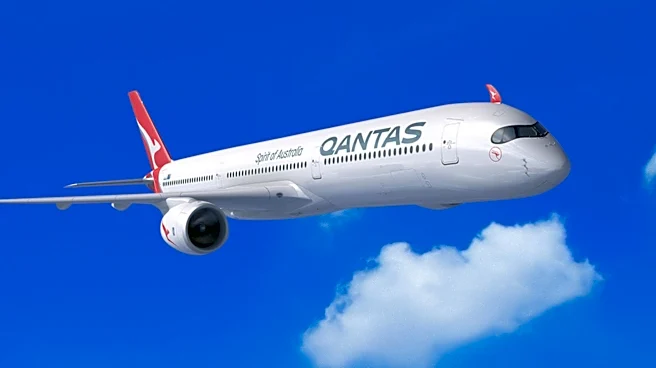
Qantas has announced a further delay in the launch of its ambitious nonstop Sydney-London flight, now pushing the inaugural commercial service to late 2027. This route, part of Qantas's 'Project Sunrise,' aims to establish the world's longest commercial flight, covering
9,188 nautical miles (17,016 km) and exceeding 20 hours in duration. The airline plans to utilize 12 Airbus A350-1000ULR (Ultra Long Range) aircraft for this service, which were ordered in May 2022. The A350-1000ULR is a specially modified version of the standard A350-1000, featuring structural enhancements, reinforced landing gear for increased maximum take-off weight, and an additional rear center fuel tank. These modifications boost its usable fuel capacity to 48,893 gallons (185,076 liters) and extend its range to up to 9,800 nautical miles (18,150 km), making it capable of completing the ultra-long-haul journey. Qantas intends to configure these aircraft with 238 seats across four classes: 6 first suites, 52 business suites, 40 premium economy seats, and 140 economy seats, a significant reduction from the standard A350-1000's typical capacity of 350-410 passengers.
Why It's Important?
The delay in Qantas's Project Sunrise has implications for the ultra-long-haul aviation market and the competitive landscape for airlines operating between Australia, the U.S., and Europe. While Qantas aims to offer a unique, time-saving service, the repeated postponements could affect its first-mover advantage and allow competitors to potentially develop alternative strategies or technologies. For U.S. travelers, the Sydney-New York JFK nonstop route, also planned under Project Sunrise, represents a significant reduction in travel time, potentially making trans-Pacific journeys more appealing. The specialized configuration of the A350-1000ULR, prioritizing passenger comfort over maximum capacity, reflects a strategic bet on the demand for premium, direct travel on these extremely long routes. This approach could influence future aircraft design and airline service models for other carriers considering similar ultra-long-haul operations, particularly as fuel efficiency and passenger experience become increasingly critical factors in airline profitability and customer choice.
What's Next?
Qantas is expected to announce the specific first route and timing for its A350-1000ULR service next month, despite the overall launch delay to late 2027. The first -1000ULR aircraft is reportedly in the paint shop in Toulouse, with test flights anticipated to begin in the coming weeks. Pilot training is already underway at Qantas's new A350 simulator in Sydney. The airline has indicated that three aircraft will be required to operate a daily nonstop service on either the Sydney-London or Sydney-New York route. Future developments will likely include further updates on aircraft deliveries from Airbus, progress in test flights, and detailed announcements regarding cabin features and passenger experience enhancements designed to mitigate the challenges of flights exceeding 20 hours. The industry will also be watching for any competitive responses from other airlines, particularly those operating connecting flights on these routes, as they assess the potential impact of Qantas's direct service.
Beyond the Headlines
The pursuit of ultra-long-haul flights like Project Sunrise highlights a broader trend in aviation towards maximizing direct connectivity and reducing travel times, even at the expense of higher operational costs and specialized aircraft. This development pushes the boundaries of aircraft engineering, passenger physiology, and inflight service design. The reduced passenger capacity in Qantas's A350-1000ULR configuration underscores a strategic shift towards catering to a premium market segment willing to pay for convenience and comfort on extended journeys. This could lead to further innovations in cabin design, such as dedicated wellness zones or enhanced sleeping arrangements, to combat fatigue and jet lag on flights exceeding 20 hours. Furthermore, the environmental impact of such long flights, despite the A350's fuel efficiency, will remain a subject of scrutiny, potentially driving further research into sustainable aviation fuels and operational efficiencies for ultra-long-haul routes.