
What's Happening?
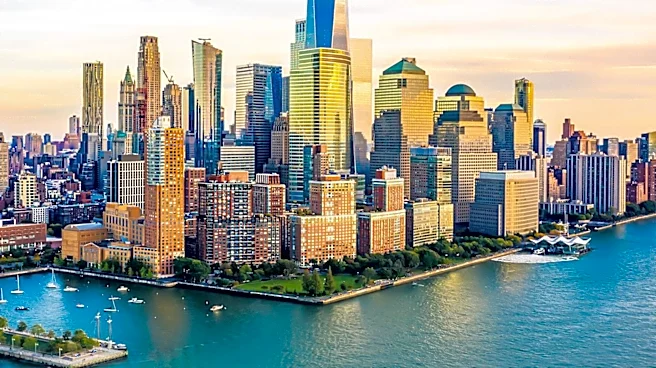
The World Trade Centers Association (WTCA) has announced the relocation of its global headquarters to One World Trade Center in New York City. This move marks a return to the World Trade Center complex
after a 25-year absence for the international trade organization. The WTCA has signed a lease for 2,556 square feet on the 46th floor of the Durst Organization and the Port Authority of New York and New Jersey (PANYNJ)'s One World Trade Center. John Drew, chair of the WTCA board of directors, stated that this relocation is a significant milestone and a meaningful homecoming, providing a dynamic setting to connect members and partners globally to support trade, investment, and economic growth. The WTCA acquired the rights to the World Trade Center name in the 1980s. The asking rent for the tower was reported to be in the high $80s to $90s per square foot as of July.
Why It's Important?
This relocation is important for several reasons, particularly for the symbolism and economic implications for New York City and global trade. The return of the WTCA to its namesake campus reinforces the World Trade Center's identity as a hub for international commerce and collaboration. For the WTCA, establishing its headquarters in such a prominent global landmark enhances its visibility and prestige, potentially attracting more international businesses and fostering greater trade relationships. The move also signifies the continued revitalization and economic strength of Lower Manhattan, demonstrating confidence in the area's commercial appeal. The presence of the WTCA can facilitate increased foreign investment and trade activities, benefiting the U.S. economy by creating opportunities for businesses to connect with global markets. This move also highlights the enduring legacy and resilience of the World Trade Center complex as a symbol of global connectivity.
What's Next?
The WTCA's new headquarters will serve as a central point for its global operations, likely leading to increased events, conferences, and networking opportunities aimed at fostering international trade and investment. The organization plans to leverage this new space to bring together members and partners from around the world, which could result in new trade agreements, partnerships, and economic initiatives. The move may also encourage other international organizations or businesses to consider establishing a presence in the World Trade Center complex, further solidifying its status as a global business destination. The Port Authority of New York and New Jersey (PANYNJ) and the Durst Organization will likely highlight this relocation as a success story in their efforts to attract tenants and promote the economic vibrancy of the area. Future discussions may also arise regarding the terms of the lease and the historical context of the WTCA's acquisition of the World Trade Center name.
Beyond the Headlines
The return of the World Trade Centers Association to One World Trade Center carries significant symbolic weight, extending beyond a simple office relocation. It represents a powerful narrative of resilience and renewal for a site deeply etched in the collective memory of the U.S. and the world. This move underscores the enduring importance of physical hubs for global commerce in an increasingly digital age, suggesting that face-to-face interaction and a prestigious physical address still hold considerable value in international business. Ethically, the relocation re-emphasizes the commitment to fostering global connections and economic cooperation, which can be seen as a counter-narrative to protectionist sentiments. Culturally, it reinforces the World Trade Center's role not just as a commercial center, but as a symbol of global interconnectedness and shared economic aspirations, transforming a site of past tragedy into a beacon of future collaboration.