





What's Happening?
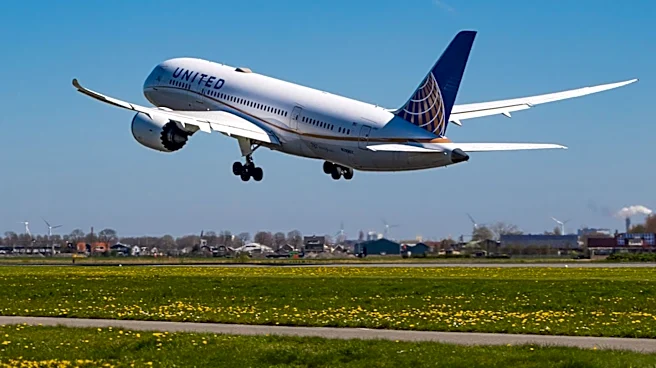
United Airlines has announced it will end all service to Tulum International Airport (TQO) in Mexico, with the final flights scheduled for early January. This decision follows a trend of other major U.S. carriers, including JetBlue, American Airlines,
and Delta Air Lines, either pulling out or significantly cutting back their services to the new airport. Tulum International Airport, which opened in March 2024, was intended to offer a more convenient travel option to Tulum's resorts compared to Cancun International Airport. However, carriers have cited disappointing demand as the reason for these service reductions. United's last flights from Newark Liberty International Airport (EWR) will be on January 2, and from Houston’s George Bush Intercontinental Airport (IAH) on January 4. The airline stated that these adjustments are part of its regular schedule modifications based on seasonality, demand, and market factors.
Why It's Important?
The complete withdrawal of United Airlines, coupled with service reductions from other major U.S. carriers, signals a significant challenge for Tulum International Airport and the broader tourism industry in Tulum. The airport was established with the expectation of boosting tourism by providing direct access, bypassing the longer journey from Cancun. The current situation indicates that initial demand projections were not met, potentially impacting local businesses, resorts, and the regional economy that relies heavily on international visitors. For U.S. travelers, this means fewer direct flight options to Tulum, likely necessitating longer travel times or connections through Cancun, which could deter some potential tourists. The reduced air service, down over 50% from two years ago according to aviation analytics firm Cirium, highlights a miscalculation in market demand or perhaps issues with the airport's operational appeal.
What's Next?
The cessation of United Airlines' service will likely prompt a reevaluation of strategies for Tulum International Airport and the Mexican tourism authorities. They may need to explore new incentives or marketing campaigns to attract airlines and travelers. For U.S. travelers planning trips to Tulum, the immediate future will involve increased reliance on flights to Cancun International Airport (CUN) and subsequent ground transportation, or exploring alternative routes with the remaining limited services from American Airlines and Delta Air Lines. The situation could also lead to increased competition among ground transport providers from Cancun to Tulum. The long-term viability and growth of Tulum International Airport will depend on its ability to demonstrate sustained demand and attract new or returning airline partners.
Beyond the Headlines
This development underscores the inherent risks in large-scale infrastructure projects like new international airports, particularly when relying on projected tourism growth. The rapid decline in airline service to Tulum International Airport suggests that convenience alone may not be sufficient to drive demand if other factors, such as overall cost, destination appeal, or competitive alternatives, are not compelling enough. It also highlights the dynamic nature of the airline industry, where routes are constantly adjusted based on profitability and passenger load factors. The situation could serve as a case study for future airport developments, emphasizing the need for robust market research and flexible operational strategies to adapt to evolving travel patterns and economic conditions. The environmental impact of reduced air traffic, while not the primary driver, could also be a subtle, albeit minor, consequence.