






What's Happening?
Lam Research has commenced construction on a new advanced research and development center in Tualatin, Oregon, marking a significant investment in accelerating the development of advanced AI chips. This facility is a key component of the company's global
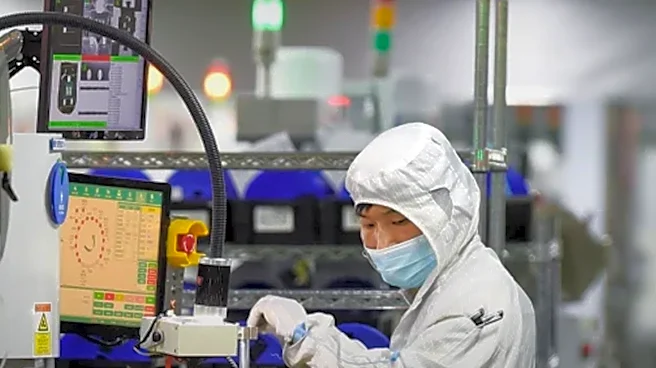
R&D network, which is slated to receive over $3 billion in investment over the next five years. The new 120,000-square-foot center, located in Oregon's 'Silicon Forest' and near major clients, is designed to significantly enhance Lam Research's R&D and validation capabilities. Upon completion, the cleanroom R&D space at Lam Research's Tualatin campus is projected to increase by over 50%, boosting the company's capacity for research, validation, and solution development. The goal is to establish this facility as one of the world's most advanced R&D centers, improving product development cycles across its global network. The groundbreaking ceremony was attended by Lam Research President and CEO Tim Archer, Executive Vice President and COO Sesha Varadarajan, U.S. Senator Jeff Merkley, U.S. Representative Suzanne Bonamici, Oregon State Treasurer Tobias Read, and senior executives from Intel Corporation and Micron Technology, among other government and community representatives.
Why It's Important?
This investment by Lam Research is crucial for the U.S. semiconductor industry and its leadership in artificial intelligence. The development of advanced AI chips is a cornerstone of future technological innovation, impacting sectors from computing and data centers to autonomous systems and healthcare. By expanding its R&D capabilities in Oregon, Lam Research is directly contributing to the domestic capacity for semiconductor manufacturing and innovation, which is vital for national economic competitiveness and security. The facility's focus on atomic-level semiconductor manufacturing processes, material science research, and hardware validation will enable breakthroughs in critical technologies like advanced deposition and etch processes. This expansion is expected to create approximately 900 construction jobs over three years, generating an estimated $500 million in economic value during the construction phase. Once operational, it will add over 400 company positions, bringing Lam Research's total employment in Oregon to over 11,000 and increasing its annual economic contribution to the state to over $1.8 billion. This signifies a substantial boost to the local and national economy, fostering job creation and technological advancement.
What's Next?
The new advanced Oregon R&D center is anticipated to become operational in 2028. Over the next few years, construction will proceed, creating numerous job opportunities and economic activity in the region. Once completed, the facility will integrate into Lam Research's global integrated professional R&D network, collaborating with other research sites worldwide to drive innovation around the clock. The increased R&D capacity will allow for closer collaboration with customers, enabling them to participate in product development from concept to wafer fab application. This will likely lead to faster development cycles for new semiconductor technologies and more tailored solutions for the evolving demands of the AI industry. The presence of senior executives from Intel and Micron at the groundbreaking ceremony suggests potential future collaborations and partnerships, further solidifying Oregon's role as a hub for semiconductor innovation. The long-term impact will be a strengthened U.S. position in the global semiconductor market and accelerated progress in AI chip technology.
Beyond the Headlines
The establishment of this advanced R&D center by Lam Research underscores a broader trend of reshoring and strengthening domestic semiconductor manufacturing capabilities in the U.S. This initiative aligns with national efforts to reduce reliance on overseas supply chains, particularly in critical technology sectors, which has become a strategic imperative for economic resilience and national security. The 'Silicon Forest' in Oregon is emerging as a significant hub for this revitalization, attracting substantial investment and talent. This development also highlights the intricate relationship between hardware innovation and the advancement of artificial intelligence. While much attention is often given to AI software and algorithms, the underlying semiconductor technology is fundamental to unlocking AI's full potential. Investing in cutting-edge R&D facilities like this ensures that the U.S. remains at the forefront of both hardware and software innovation in the AI era. Furthermore, the significant economic benefits, including job creation and increased state economic contributions, demonstrate how strategic investments in high-tech industries can drive regional prosperity and foster a skilled workforce.