




What's Happening?
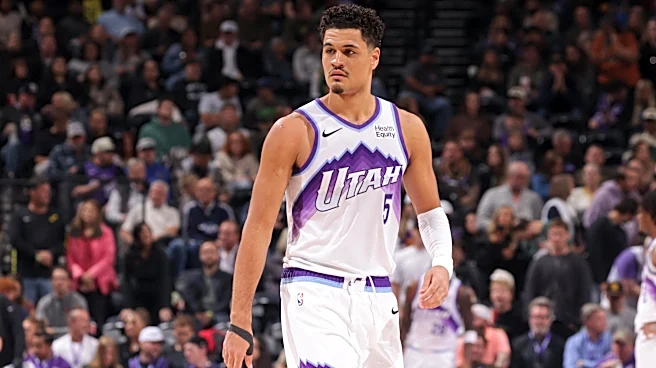
Utah Jazz coach Will Hardy has highlighted the need for continued foundational development for rookie guard Darryn Peterson, despite Peterson's recent strong performances. Peterson, a 19-year-old guard, has been a significant contributor for the Jazz,
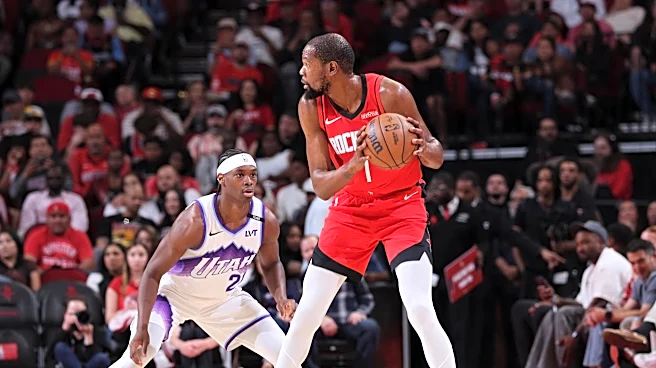
starting all 13 games he has played and averaging 17.2 points, 4.2 rebounds, and 3.8 assists in 31.2 minutes per night. He has also achieved five consecutive 20-point games. Hardy, however, cautioned against premature declarations of Peterson's arrival as a star player, emphasizing that there are numerous areas for improvement. Following Peterson's 25-point game in a loss to Miami, Hardy stated that while Peterson is handling himself well and showing glimpses of potential, the focus must remain on building correct habits through foundational work. Peterson recently experienced left knee pain during a game against Houston but is not expected to have a long-term injury and was not listed on the injury report for an upcoming game against San Antonio.
Why It's Important?
This development is important for the Utah Jazz as it underscores the team's long-term player development strategy, particularly for high-potential rookies like Darryn Peterson. By emphasizing foundational improvement over immediate statistical output, Coach Hardy is signaling a commitment to sustainable growth, which can prevent young players from plateauing or developing bad habits. For Peterson, this guidance is crucial for his evolution into a consistent and impactful NBA player. His current performance, while impressive, is being viewed within the context of a broader developmental plan. The Jazz's ability to nurture Peterson's talent effectively will directly influence their future competitiveness and roster construction. Furthermore, managing expectations for a young player who is performing well can help mitigate pressure and allow him to focus on the process of improvement rather than solely on results, which is vital for mental and physical longevity in professional sports.
What's Next?
Moving forward, the Utah Jazz coaching staff, led by Will Hardy, will likely continue to focus on specific areas of Darryn Peterson's game for improvement, as indicated by Hardy's comments. This will involve detailed practice plans, film sessions, and in-game adjustments designed to refine Peterson's skills and decision-making. Peterson's immediate future involves managing his recent knee discomfort, though it is not expected to be a long-term issue. His continued presence in the starting lineup suggests the team will provide him with significant playing time to gain experience and implement coaching feedback. The Jazz will monitor his progress closely, looking for consistent application of foundational principles in his play. The team's overall performance and Peterson's individual development will be key storylines as the season progresses, with the coaching staff aiming to balance his current contributions with his long-term potential.
Beyond the Headlines
Beyond the immediate focus on Darryn Peterson's development, Coach Hardy's approach reflects a broader philosophical stance on player management in the NBA. In an era where immediate impact and highlight-reel plays often dominate narratives, Hardy's emphasis on 'foundational parts' and 'building habits correctly' highlights a more patient, process-oriented strategy. This approach can be particularly beneficial for teams in a rebuilding phase, as it prioritizes sustainable success over short-term gains. It also speaks to the psychological aspect of professional sports, where managing the expectations and pressures on young talent is critical. By publicly tempering expectations while acknowledging potential, Hardy creates an environment where Peterson can grow without the undue burden of being labeled a finished product too early. This long-term view can foster a more resilient and fundamentally sound team culture, potentially leading to greater success down the line.