
What's Happening?
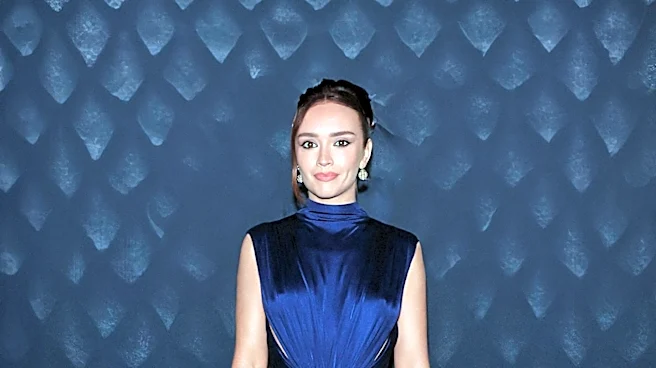
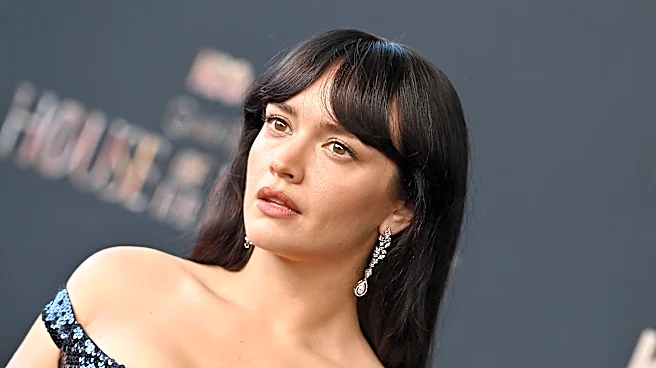
Olivia Cooke, who portrays Queen Alicent Hightower in HBO’s 'House of the Dragon,' has revealed that the show's fan culture, which she describes as often being 'steeped in misogyny' and containing 'a lot
of racism,' prompted her to take a break from social media. In an interview with GQ, Cooke discussed the intense fan interpretations that she believes often bear no resemblance to the on-screen narrative. She noted that the online discourse became unhealthy, leading her to deactivate her social media accounts ahead of the third season premiere in June. Cooke also expressed concern about the increasing 'celebri-fied nature' of acting, suggesting that the industry's focus has shifted from artistic creation to follower counts and brand deals. This sentiment echoes experiences shared by other actors from the 'Game of Thrones' universe, such as Sophie Turner, who previously spoke about the mental health toll of online scrutiny.
Why It's Important?
This situation highlights a growing concern within the entertainment industry regarding the impact of toxic fandoms and social media culture on actors' mental well-being and artistic integrity. Cooke's decision to step away from social media underscores the pressure performers face from intense public scrutiny and often aggressive online commentary. The prevalence of misogynistic and racist remarks within fan communities, as described by Cooke, points to broader societal issues that manifest in online spaces. This trend can deter actors from engaging with their audiences, potentially leading to a more detached relationship between creators and consumers. Furthermore, Cooke's critique of the 'celebri-fied nature' of acting raises questions about the commercialization of art and the expectation for actors to maintain a constant online presence for promotional purposes, often at the expense of their personal lives and artistic focus.
What's Next?
As 'House of the Dragon' continues, the conversation around fan behavior and its impact on actors is likely to persist. Cooke's public statements may encourage other actors to speak out about similar experiences or to adopt similar strategies for managing their online presence. The entertainment industry might face increased pressure to address the issue of toxic fandoms, potentially leading to new guidelines or support systems for actors. There could also be a broader re-evaluation of the role of social media in promoting television shows and films, with a potential shift towards more controlled or curated interactions between stars and their audiences. The ongoing debate about the balance between artistic expression and commercial demands in the digital age will likely continue to evolve.
Beyond the Headlines
The issues raised by Olivia Cooke extend beyond the immediate context of 'House of the Dragon' fandom, touching upon the ethical and cultural implications of digital interaction. The anonymity and perceived distance of online platforms can embolden individuals to engage in behavior they might not exhibit in face-to-face interactions, leading to a normalization of misogyny and racism in certain online communities. This phenomenon challenges the notion of a healthy fan culture, where passion for a series can sometimes devolve into personal attacks and harassment. The blurring lines between an actor's public persona and their private life, exacerbated by social media, also raises questions about privacy and the right to disengage from constant public consumption. Ultimately, this situation reflects a broader societal struggle with digital etiquette, accountability, and the psychological effects of constant online exposure.