


What's Happening?
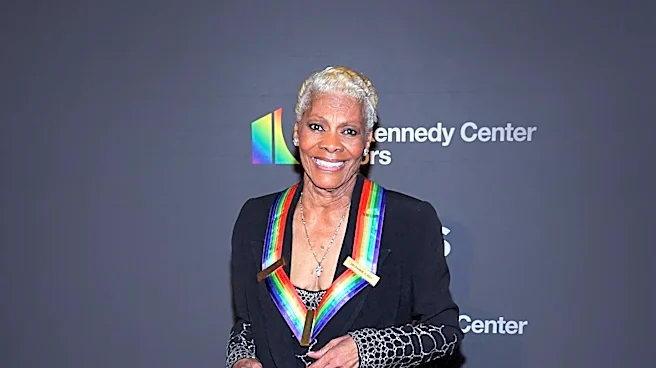
George Strait was celebrated at the Kennedy Center Honors in 2025, and Barbara Mandrell is set to be honored at the 49th Kennedy Center Honors on December 7, 2026. This marks the first time in the program's history that country music artists have been
honored in consecutive years. Mandrell will be recognized alongside Paul Anka, David Foster, Andy Garcia, and David Mamet. The ceremony itself is also making history by moving out of the Kennedy Center for the first time and will be held at Capital One Arena in Washington, D.C. The Kennedy Center Honors, which debuted in 1978, initially focused on traditional fine arts, with country music gaining recognition slowly over the years. Roy Acuff was the first country honoree in 1991, followed by other notable artists such as Johnny Cash, Willie Nelson, Loretta Lynn, Dolly Parton, George Jones, Merle Haggard, Reba McEntire, and Garth Brooks.
Why It's Important?
The consecutive honoring of George Strait and Barbara Mandrell at the Kennedy Center underscores a significant shift in the recognition of country music within mainstream American culture and the arts. Historically, the Kennedy Center Honors primarily celebrated classical and traditional performing arts. This back-to-back recognition highlights the growing cultural impact and artistic merit attributed to country music, potentially influencing future selections and broadening the scope of what is considered 'American art.' For the country music industry, this provides increased visibility and validation, potentially attracting new audiences and further solidifying its place in the national cultural landscape. It also reflects a broader trend of popular music genres, including R&B, folk, rock, Latin, and rap, gaining more representation in prestigious national awards, indicating a more inclusive approach to celebrating American artistic contributions.
What's Next?
The upcoming 49th Kennedy Center Honors ceremony on December 7, 2026, will be a key event, not only for the honorees but also for the country music genre as it continues to gain national recognition. The move of the ceremony to Capital One Arena suggests a potential for larger audiences and a more public-facing event, which could further elevate the profile of the honorees and the arts they represent. This trend of consecutive country music honorees may lead to increased representation for the genre in future Kennedy Center Honors classes, encouraging a more diverse range of artists to be considered. The continued inclusion of country music in such prestigious events could also inspire younger generations of country artists and fans, fostering further growth and innovation within the genre.
Beyond the Headlines
The consecutive Kennedy Center Honors for George Strait and Barbara Mandrell signify more than just individual accolades; they represent a deeper cultural acknowledgment of country music's enduring legacy and its evolution within the American artistic tapestry. This shift challenges traditional perceptions of 'high art' versus 'popular art,' suggesting a more fluid and inclusive understanding of cultural contributions. It also highlights the power of sustained influence, as artists like Strait and Mandrell have shaped the genre for decades. The move of the ceremony to a larger venue like Capital One Arena could also symbolize a broader effort to make these prestigious awards more accessible and relevant to a wider public, reflecting a democratization of cultural recognition. This development could encourage other national arts institutions to re-evaluate their criteria for recognition, potentially leading to a more diverse and representative celebration of American artistic talent across all genres.