





What's Happening?
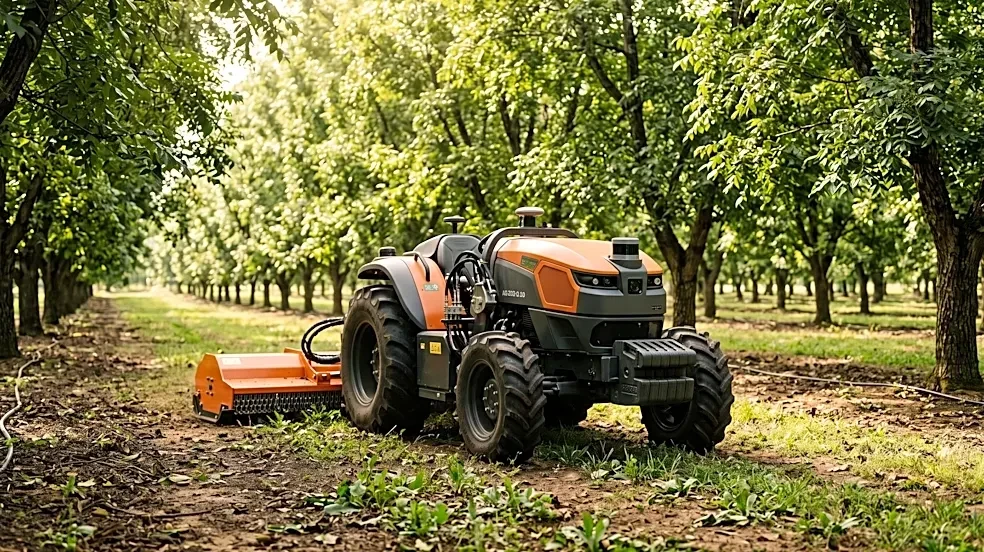
Kubota North America and Agtonomy are expanding their partnership to advance a pilot program introducing autonomous capabilities to Kubota's M5L Low Profile tractor. This initiative aims to enhance efficiency for orchard and nut growers by addressing
labor and operational challenges. The M5L tractor was chosen for its low-profile design and increased lift capacity, making it suitable for operating in tight spaces within orchards and nut production environments. The autonomous platform is designed to support various farming activities, including spraying, mowing, underplant cultivation, and sanitation mowing. This collaboration builds on previous efforts between the two companies to bring practical autonomous solutions to the agricultural industry, with a focus on improving consistency and reducing pressure on labor resources for specialty crop growers. Feedback from growers has been integral to the development process, ensuring the technology meets the specific needs of producers.
Why It's Important?
This expanded partnership is significant for the U.S. agricultural industry, particularly for specialty crop growers who face persistent challenges related to workforce availability, rising operating costs, and seasonal demands. By automating critical tasks, the new autonomous tractor platform can help farms maintain productivity and make more efficient use of existing labor. This technological advancement offers a pathway for growers to improve consistency in operations, potentially leading to better crop yields and reduced operational expenses. The focus on affordability and practical application aims to lower barriers to adopting advanced automation, making it accessible to a broader range of farmers. This development could also influence labor dynamics in the agricultural sector, shifting the demand towards skilled operators who can manage and maintain autonomous systems.
What's Next?
Kubota and Agtonomy plan to continue refining the system capabilities based on additional grower feedback, aiming to expand the value of autonomous technology for specialty agriculture. The expanded pilot program is a step towards the future commercialization of autonomous tractors in this segment. Kubota has emphasized that dealer support will be crucial for the adoption process, with dealers assisting growers in understanding, implementing, and maintaining these new autonomous systems as they become more widely available. This ongoing development and commercialization effort will likely see more advanced agricultural tools integrated into farming practices, further accelerating the role of automation in modern farming and addressing the evolving needs of orchard and nut producers.
Beyond the Headlines
The introduction of autonomous tractors like the Kubota M5L signifies a broader shift towards precision agriculture and smart farming practices. Beyond immediate efficiency gains, this technology could lead to long-term sustainability benefits by optimizing resource use, such as water and pesticides, through more precise application. Ethically, the increasing automation in agriculture raises questions about the future of farm labor and the skills required for the agricultural workforce. It also highlights the growing reliance on technology and data in food production, potentially leading to new business models and service offerings in the agricultural tech sector. This trend could also influence agricultural policy, prompting discussions around technology adoption incentives, training programs for new agricultural roles, and regulatory frameworks for autonomous farm equipment.