
What's Happening?
The global electronics assembly market is projected to experience substantial growth, increasing from $2.125 trillion in 2025 to $4.038 trillion by 2030. A significant portion of this expansion, approximately
$1.19 trillion, is expected to originate from cloud and AI services infrastructure, primarily through servers and enterprise storage systems. This growth is anticipated to have a considerable impact on semiconductor demand and the broader electronics supply chain. Semiconductor-related assembly value alone is forecast to rise from $781 billion in 2025 to about $2.07 trillion by 2030. Materials and components are also expected to constitute a larger share of global electronics assembly value, reaching 76.2% by 2030, while manufacturing and other value-added activities are projected to grow at an annual rate of 8.7%, reaching $962.8 billion. Other sectors like communications, automotive electronics, and industrial demand will also see increased assembly values, though their relative market share may decrease as cloud and AI infrastructure expands.
Why It's Important?
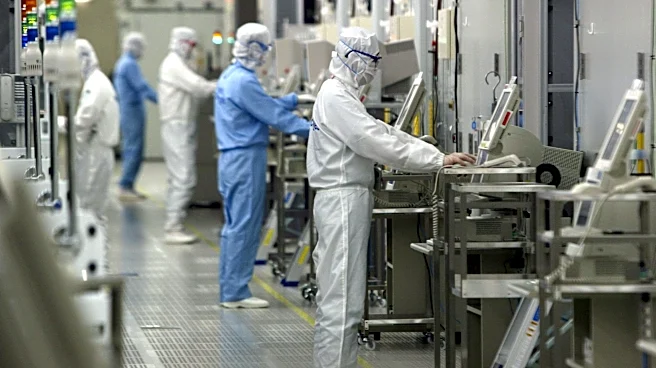
This projected growth signifies a major shift in the electronics industry's landscape, with significant opportunities for U.S. semiconductor manufacturers, component suppliers, and electronics manufacturing services (EMS) providers. The increasing demand for sophisticated processors, high-bandwidth memory, storage, power management, and interconnect technologies driven by accelerated computing systems will fuel innovation and investment in these areas. For the U.S., this trend supports the strategic importance of domestic semiconductor production and advanced manufacturing capabilities, aligning with efforts to strengthen supply chain resilience and national security. Companies involved in data center infrastructure, high-performance computing, and AI workloads stand to gain substantially, while those in traditional electronics sectors will need to adapt to the evolving market dynamics. The emphasis on advanced materials and components also highlights the critical role of the U.S. in developing and supplying these foundational elements.
What's Next?
The electronics industry is expected to continue its rapid evolution, with ongoing investment in data center infrastructure, high-performance computing, and AI workloads. This will likely lead to further advancements in semiconductor technology and manufacturing processes. Manufacturers and suppliers will need to focus on meeting the increasing demand for specialized components and materials required for AI and cloud applications. The shift towards more sophisticated combinations of processors and memory will drive research and development into new interconnect technologies and power management solutions. Additionally, the continued growth in communications, automotive electronics, and industrial automation will provide supplementary opportunities, requiring continuous innovation and adaptation from companies across the electronics supply chain to maintain competitiveness and capture market share.
Beyond the Headlines
The profound impact of cloud and AI on the electronics sector extends beyond mere economic growth, touching upon critical aspects of technological sovereignty and global competitiveness. As AI infrastructure becomes more central to various industries, the control and security of the underlying semiconductor and electronics supply chains become paramount. This trend could accelerate the push for localized manufacturing and R&D in the U.S., driven by both economic opportunity and national security concerns. The increasing complexity of AI systems also raises ethical considerations regarding data privacy, algorithmic bias, and the responsible development of advanced technologies. Furthermore, the environmental footprint of expanding data centers and semiconductor manufacturing, particularly in terms of energy consumption and resource use, will become a more pressing issue, necessitating sustainable practices and green technology innovations within the industry.