



What's Happening?
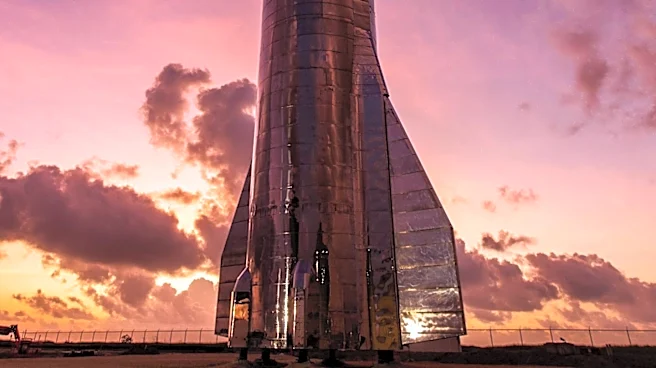
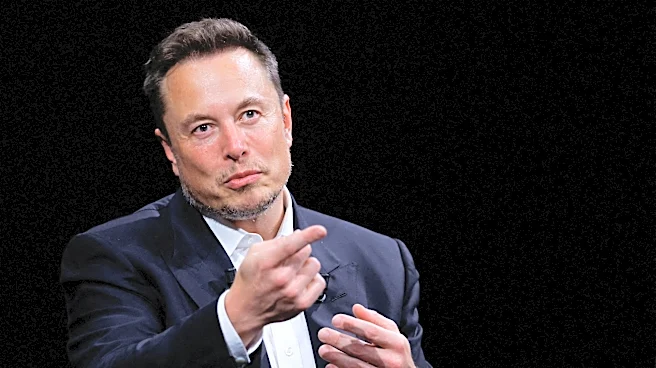
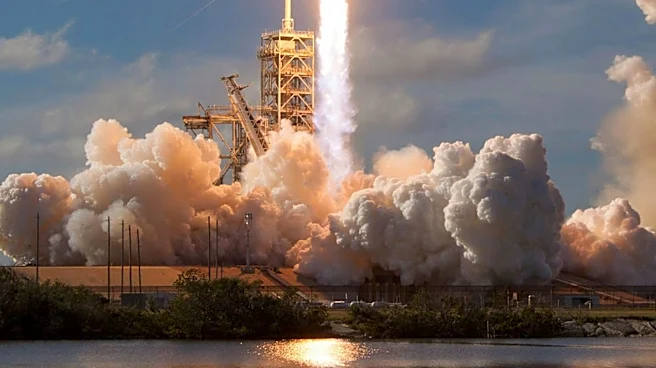
Billionaire investor and CEO of Baron Capital, Ron Baron, has projected that Elon Musk's SpaceX could achieve a valuation of $14 trillion to $15 trillion, primarily driven by the growth of its Starlink satellite internet business. Baron anticipates Starlink generating
approximately $1 trillion in annual revenue within 10 years, with EBITDA reaching $700 billion to $800 billion. This optimistic forecast is based on a significant reduction in launch costs, with the Falcon 9 bringing costs down to $2,700 per kilo and future rockets potentially lowering it to $100-$150 per kilo. Baron expects Starlink's customer base to grow from 15 million to 300 million over the next decade, with a substantial portion of revenue coming from government, enterprise, and mobile customers. While bullish on Tesla's Full Self-Driving (FSD) technology and its position in EVs, Baron expressed skepticism about Tesla's humanoid robot ambitions, stating, 'I'm not giving a lot to the robots.'
Why It's Important?
Ron Baron's valuation prediction for SpaceX, if realized, would make it one of the most valuable companies globally, significantly impacting the space and telecommunications industries. The projected growth of Starlink highlights the increasing importance of satellite internet for global connectivity, potentially bridging digital divides and serving diverse markets. The dramatic reduction in launch costs, driven by SpaceX's reusable rocket technology, is a game-changer for space exploration and commercialization, making space more accessible and affordable. This could accelerate innovation in various sectors, from scientific research to defense. Baron's contrasting views on Tesla's FSD and robot ambitions reflect the differing investment perspectives on emerging technologies; while FSD is seen as a tangible, growing asset, the long-term viability and profitability of humanoid robots remain a subject of debate. This analysis provides a significant investor perspective on the future trajectory of Elon Musk's ventures and the broader tech landscape.
What's Next?
SpaceX will continue to focus on expanding its Starlink constellation and further reducing launch costs with its next-generation rockets. The company's ability to achieve the projected revenue and EBITDA figures will depend on its success in attracting new customers across consumer, government, enterprise, and mobile segments, as well as its continued technological advancements in rocket reusability. For Tesla, the focus will remain on the adoption and improvement of its FSD technology, as well as its core EV and energy businesses. The humanoid robot project, Optimus, will need to demonstrate significant progress and practical applications to convince skeptics like Baron. Investors will closely monitor SpaceX's financial performance and Starlink's subscriber growth, as well as Tesla's FSD rollout and the development of its robotics division, to validate or challenge these projections.
Beyond the Headlines
Baron's bold prediction for SpaceX underscores a broader shift in the global economy towards space-based industries and advanced connectivity. The vision of Starlink as a trillion-dollar revenue generator highlights the potential for private companies to play a dominant role in providing essential global infrastructure. This raises questions about regulatory frameworks for space-based services, international cooperation in managing orbital resources, and the potential for new forms of digital divides. The skepticism surrounding Tesla's humanoid robots, despite Musk's enthusiasm, reflects the inherent challenges and ethical considerations in developing general-purpose AI in physical forms. It prompts a deeper discussion about the societal impact of advanced robotics, job displacement, and the long-term integration of AI into daily life. This divergence in investor confidence between space internet and humanoid robots illustrates the varying degrees of perceived risk and reward in frontier technologies.