




What's Happening?
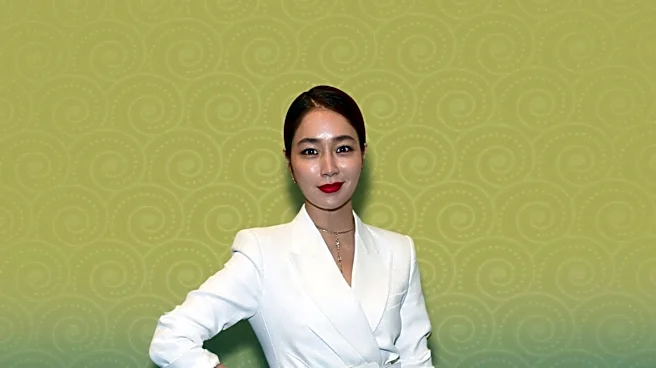
Actress Lee Min Jung is gaining attention for her distinctive parenting philosophy, particularly her decision not to enroll her son, Jun Hoo, in the highly competitive and expensive private education programs prevalent in Seoul's Daechi-dong district.
Despite her family's substantial real estate assets, Lee Min Jung is opting for a less conventional path, focusing on allowing her son to discover his own interests rather than pushing him into advanced academic studies. She revealed in a YouTube video that Jun Hoo, a fifth-grader, only attends basketball and one math class, with no other private tutoring. Her approach emphasizes creating space for her child to adapt to school life and develop personal hobbies at his own pace. This contrasts sharply with the typical educational environment in Daechi-dong, known for its intense after-school academies and rigorous study schedules. Lee Min Jung believes in fostering a sense of 'lack' in her child, arguing that constantly fulfilling every desire can hinder personal development.
Why It's Important?
Lee Min Jung's parenting style challenges the prevailing high-pressure educational norms, particularly in affluent societies where intensive private tutoring is common. Her decision to prioritize self-discovery and a balanced childhood over academic acceleration could influence other parents to reconsider the benefits of such demanding educational paths. This approach highlights a growing debate about the psychological and developmental impacts of early academic pressure versus fostering intrinsic motivation and well-being in children. By deliberately limiting her son's exposure to excessive private education, Lee Min Jung is advocating for a more child-centric development model, which could lead to broader discussions on educational reform and parental choices. Her emphasis on teaching financial literacy by involving her son in managing his own allowance also underscores the importance of practical life skills alongside academic learning.
What's Next?
Lee Min Jung's continued public sharing of her parenting journey, particularly through her YouTube channel, is likely to spark further discussion and potentially inspire other parents to adopt similar strategies. As her son grows, the long-term outcomes of this less conventional educational path will be observed, potentially providing a case study for the effectiveness of prioritizing self-directed learning and personal interests. There may be increased dialogue among educators, parents, and child development experts regarding the balance between academic achievement and holistic child development. Her approach could also lead to a re-evaluation of the societal pressures that drive parents to enroll children in extensive private education, potentially fostering a movement towards more balanced and less stressful childhoods.
Beyond the Headlines
The deeper implications of Lee Min Jung's parenting choices touch upon societal values regarding success, childhood, and the role of education. In a culture often driven by academic competition, her stance offers an alternative narrative that values resilience, self-reliance, and intrinsic motivation. This approach implicitly critiques the 'achievement at all costs' mentality that can lead to burnout and mental health issues in children. Ethically, it raises questions about parental responsibility in shaping a child's future versus allowing them autonomy in their developmental journey. Culturally, it challenges the notion that financial prosperity must translate into maximal educational investment, suggesting that true wealth lies in fostering well-rounded individuals capable of navigating life's challenges independently. Her philosophy of teaching the 'value of scarcity' in an environment of abundance is a profound lesson in character building.