






What's Happening?
The U.S. economy added a robust 165,000 jobs in October, significantly surpassing economists' estimates of 65,000 new positions, according to a report released by the Bureau of Labor Statistics. This strong job creation led to a slight decrease in the unemployment
rate, which fell from 4.2% to 4.1%. The report also indicated that hourly earnings increased by 0.4% for the month and 3.1% annually. Furthermore, job numbers for both September and August were revised upwards, with an additional 31,000 jobs for September and 53,000 for August, indicating a stronger underlying trend in the labor market than previously reported. This positive data follows a period of sluggishness earlier in the year.
Why It's Important?
The unexpectedly strong job growth in October has increased the probability of the Federal Reserve implementing another interest rate hike in December. This robust performance provides the Fed with additional evidence of a resilient labor market, which could influence its monetary policy decisions aimed at controlling inflation. The sustained job creation, coupled with moderate wage growth, suggests a dynamic economic environment, though concerns about rising living costs persist. The upward revisions to previous months' job figures also indicate that the economic recovery has been more robust than initially perceived, potentially giving policymakers more confidence in the economy's ability to absorb higher interest rates.
What's Next?
With the strong jobs report, financial markets are now anticipating a higher likelihood of the Federal Reserve raising interest rates at its upcoming December meeting. Investors and businesses will be closely monitoring subsequent economic data, particularly inflation reports, for further clues on the Fed's trajectory. The continued strength in the labor market may also influence consumer spending patterns and business investment decisions in the coming months. Policymakers will likely continue to weigh the strength of the job market against inflation concerns as they formulate future economic strategies.
Beyond the Headlines
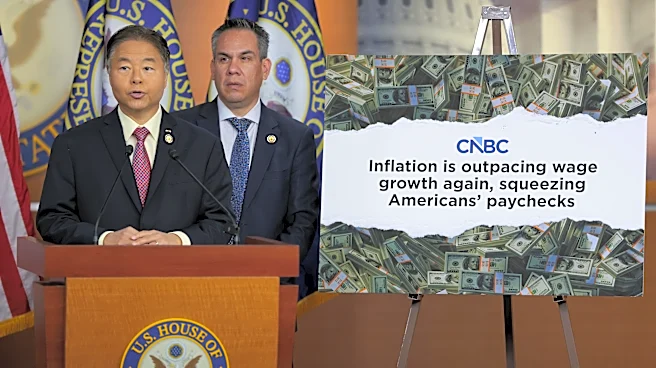
The consistent job growth, particularly exceeding expectations, highlights the ongoing strength and adaptability of the U.S. economy. However, the moderate wage growth of 3.1% annually, while helping to curb inflation, also points to a potential lag in real wage gains for many households when factoring in the rising cost of living. This disparity can contribute to public skepticism about the overall economic expansion, as indicated by recent political outcomes. The sustained demand for labor, even with global uncertainties, suggests underlying resilience but also raises questions about the long-term sustainability of growth without significant real wage increases for the broader workforce.