






What's Happening?
The Society for Human Resource Management (SHRM) is highlighting the importance of building 'micro-cultures' within organizations to bridge generational differences and foster a more cohesive workplace. According to the American Psychological Association’s
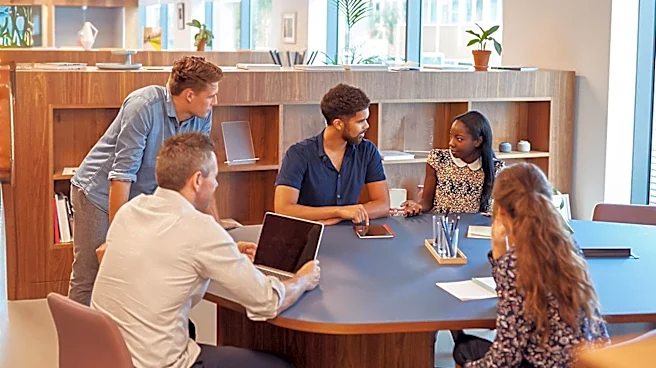
2024 Work in America survey, nearly half of workers aged 18-25 feel their ideas are undervalued by older colleagues, and 62% prefer working with their own age group. SHRM suggests that strong micro-cultures can transform colleagues into trusted collaborators, leading to improved performance, as evidenced by Gallup's 2024 research showing top-quartile engagement teams have 23% higher profitability. Key strategies include demonstrating core values through onboarding, creating opportunities for connection through social gatherings and shared learning, giving every employee a voice, and embracing individual differences rather than viewing them as friction.
Why It's Important?
Addressing generational differences in the workplace is crucial for U.S. businesses to maintain productivity, foster innovation, and retain talent. With multiple generations now coexisting in the workforce, friction can arise from differing expectations regarding communication, hierarchy, and feedback. By actively cultivating micro-cultures, organizations can mitigate these issues, leading to higher employee engagement, reduced turnover, and increased profitability. This approach benefits all stakeholders: employees experience greater psychological safety and a sense of belonging, while companies gain from diverse perspectives and improved team dynamics. Ignoring these generational gaps can result in disengaged employees, communication breakdowns, and a less productive work environment, ultimately impacting a company's bottom line and competitive edge.
What's Next?
HR leaders are encouraged to implement proactive steps to build strong micro-cultures. This includes revamping onboarding processes to actively demonstrate core values like collaboration, rather than just presenting them. Organizations should also create more inclusive low-pressure social gatherings, invest in shared learning opportunities, and ensure all voices are heard in decision-making processes, potentially by setting norms in meetings or creating alternative feedback channels. The continued focus on psychological safety and valuing individual differences will be paramount. Companies that successfully adopt these strategies are likely to see improved employee satisfaction, better team performance, and a more resilient organizational culture capable of adapting to future workforce shifts.
Beyond the Headlines
The concept of micro-cultures extends beyond mere generational harmony; it touches upon the fundamental human need for belonging and recognition within a professional context. In an increasingly diverse workforce, the ability to embrace and leverage individual differences, rather than allowing them to create division, is a hallmark of progressive leadership. This approach can lead to a more equitable and inclusive workplace where diverse communication styles and cultural backgrounds are seen as assets. Furthermore, by fostering environments where every voice is valued, organizations can cultivate a culture of ownership and initiative, moving away from compliance-driven models. This shift has profound implications for organizational innovation, employee well-being, and the long-term sustainability of businesses in a rapidly evolving global economy.