




What's Happening?
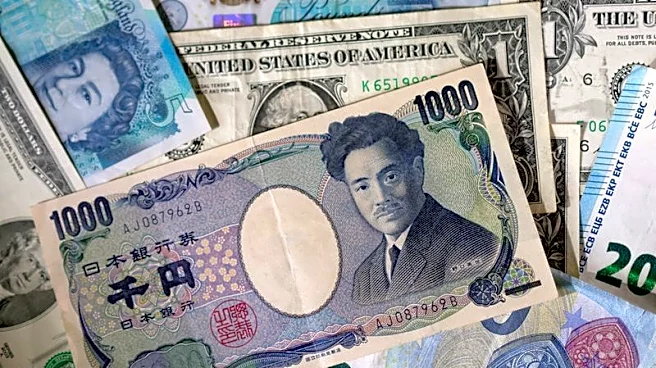
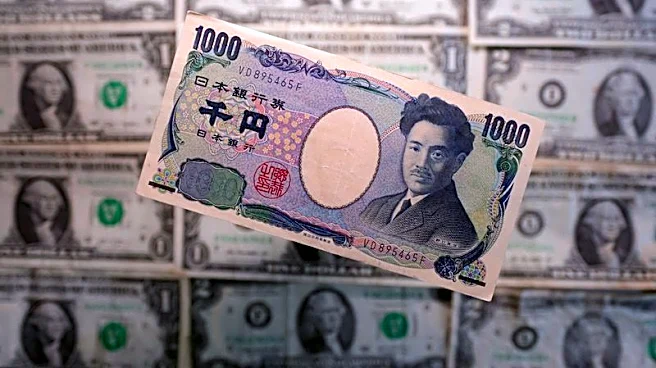
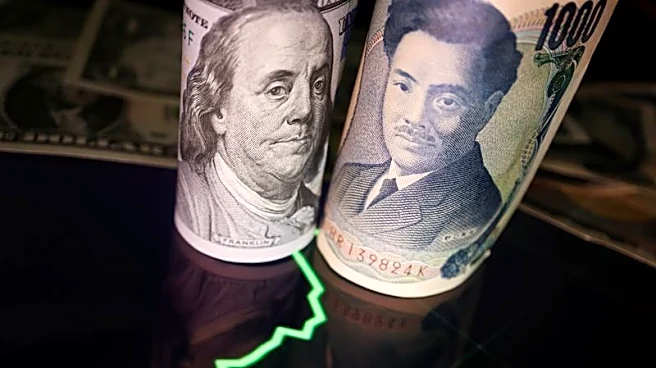
The U.S. Treasury and Japan's Ministry of Finance have intervened in the currency markets to support the Japanese yen, which has been experiencing significant depreciation against the U.S. dollar. This intervention involved the U.S. Treasury buying yen through
the Federal Reserve Bank of New York, marking a coordinated effort to stabilize the yen's value. The yen had recently hit a 40-year low against the dollar, trading near 164 yen per dollar before the intervention. The move is seen as a strong signal of U.S. support for Japan's efforts to defend its currency. The intervention comes amid broader economic uncertainties, including fluctuating oil prices and geopolitical tensions, which have contributed to the yen's weakness.
Why It's Important?
The intervention in the currency markets is significant as it highlights the economic interdependence between the U.S. and Japan, two major global economies. A weaker yen can boost the profits of Japanese companies with substantial overseas operations, but it also increases the cost of imports, affecting Japan's purchasing power. For the U.S., a weaker dollar can enhance the competitiveness of American exports. The intervention reflects the strategic economic interests of both nations in maintaining currency stability. It also underscores the role of the U.S. dollar as a safe haven for investors during times of global uncertainty, which can have ripple effects on international trade and economic policies.
What's Next?
The currency intervention is expected to have a temporary effect on stabilizing the yen. However, the underlying economic factors, such as Japan's lower interest rates and global economic conditions, may continue to exert pressure on the yen. Future actions by the U.S. and Japan will likely depend on the yen's performance and broader economic indicators. Stakeholders, including businesses and policymakers, will be closely monitoring the situation to assess the need for further interventions or policy adjustments. The ongoing geopolitical tensions and economic data releases, such as U.S. labor market reports, will also influence future currency market dynamics.