




What's Happening?
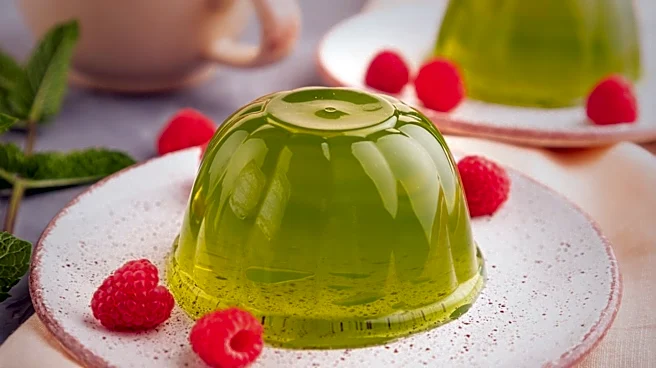
The search for vegetarian alternatives to gelatine is a topic of interest among chefs and home cooks alike. Gelatine, known for its unique texture, is challenging to replace with plant-based gelling agents such as agar-agar, gellan gum, and pectin. Richard
Phillips, head of pastry at Timberyard in Edinburgh, notes that while these alternatives exist, they do not replicate gelatine's texture. Agar, derived from seaweed, is a popular substitute but results in a more crumbly texture. Chefs like Reece Kallah use agar in specific applications, such as fruit puree gels, but acknowledge that it lacks the melt-in-the-mouth quality of gelatine. The discussion highlights the need for recipe adaptation when using these substitutes.
Why It's Important?
The exploration of vegetarian gelatine alternatives is significant for those adhering to vegetarian or vegan diets, as well as for the food industry seeking to cater to diverse dietary preferences. The ability to substitute gelatine without compromising texture and quality is crucial for maintaining the appeal of desserts and other culinary creations. This shift also reflects broader trends in the food industry towards plant-based ingredients and sustainability. However, the challenge remains in achieving the same culinary results, which may require innovation and experimentation in recipe development.
Beyond the Headlines
The use of vegetarian alternatives to gelatine raises questions about the future of culinary practices and the potential for new textures and flavors in food. As chefs and food scientists continue to experiment with plant-based gelling agents, there may be opportunities to create novel dishes that appeal to a wider audience. Additionally, the demand for vegetarian and vegan options is likely to drive further research and development in this area, potentially leading to new products and techniques that enhance the culinary landscape.