




What's Happening?
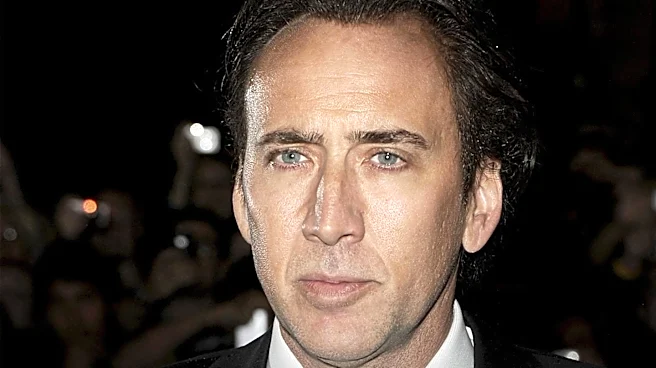
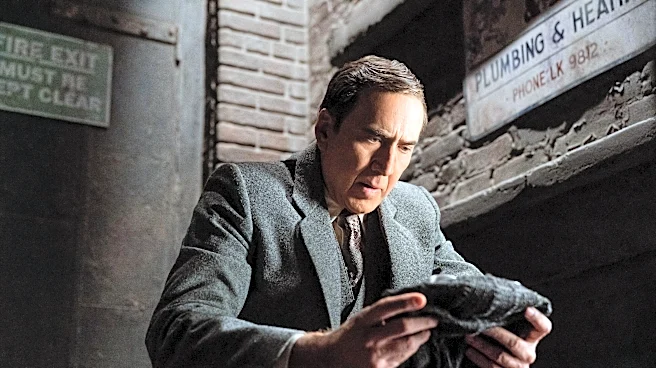
Actor Nicolas Cage has publicly stated his relief regarding the cancellation of the 'Spider-Noir' series after its first season. In an interview with IGN, Cage explained that he found the single season to be 'perfect,' allowing him to avoid repeating
the character and potentially 'wearing out his welcome.' He emphasized his preference for projects with defined endpoints, citing his upcoming role in HBO's 'True Detective' as another example of a single-season commitment. Cage also voiced his opposition to Amazon's stance on artificial intelligence, noting that he is 'not an AI-friendly actor' and did not sign a waiver for AI use on 'Spider-Noir.' This stance suggests a potential reluctance to work with Amazon in the future due to their significant investment in OpenAI.
Why It's Important?
Nicolas Cage's comments highlight a growing tension within the entertainment industry concerning creative control, actor longevity, and the increasing integration of artificial intelligence. His desire to avoid character repetition reflects a broader artistic concern among actors who seek diverse roles and challenges, rather than being typecast or confined to long-running franchises. Furthermore, Cage's explicit opposition to AI, particularly in the context of a major studio like Amazon, underscores a significant ethical and professional debate. This stance could influence other actors and creators to scrutinize their contracts and partnerships more closely, potentially leading to more robust discussions and policies regarding AI's role in content creation and intellectual property rights. The financial implications for studios investing heavily in AI, like Amazon, could also be affected if prominent talent chooses to disengage.
What's Next?
While 'Spider-Noir' is concluded, Amazon is reportedly developing new Spider-Verse series centered on Ben Reilly and Kaine Parker, clones of Peter Parker/Spider-Man, with potential 'significant changes' to the comic book storyline. Nicolas Cage, meanwhile, is moving on to 'True Detective' and other projects that align with his creative preferences and ethical considerations regarding AI. His public statements could prompt further dialogue within the entertainment industry about AI usage and its impact on creative talent. It remains to be seen if other actors will follow Cage's lead in publicly opposing AI-friendly studios or if studios will adjust their policies to accommodate such concerns.
Beyond the Headlines
Nicolas Cage's remarks delve into the deeper philosophical and ethical implications of artistic integrity in an era of technological advancement. His concern about 'wearing out his welcome' by repeating a character speaks to the challenge of maintaining freshness and authenticity in long-form storytelling, a common issue in franchise-driven entertainment. More profoundly, his opposition to AI touches upon the fundamental question of human creativity versus algorithmic generation. This debate extends beyond the entertainment industry, raising questions about the future of work, intellectual property, and the value of human artistry in a world increasingly shaped by artificial intelligence. The tension between artistic freedom and corporate technological adoption is likely to be a defining theme in the coming years.