






What's Happening?
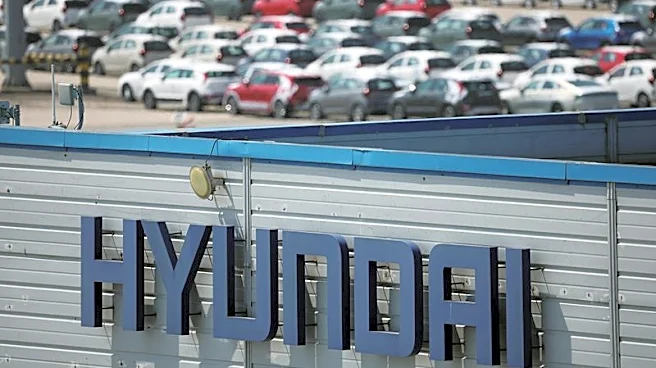
Hyundai has commenced production at its new battery plant in Georgia, which is expected to supply battery cells for up to 300,000 electric vehicles annually. This facility is already providing batteries to Hyundai's electric vehicle (EV) plant in Savannah.
The plant's establishment follows a significant immigration incident last year, where U.S. authorities detained around 450 individuals, including over 300 South Korean nationals, at the site. Hyundai plans to integrate robotics extensively in its operations, aiming to produce 30,000 humanoid robots annually by 2028 to enhance manufacturing efficiency. This development is part of Hyundai's broader strategy to expand its EV production capabilities in the United States.
Why It's Important?
The opening of Hyundai's battery plant in Georgia is a significant step in bolstering the U.S. electric vehicle industry. By increasing the domestic supply of battery cells, Hyundai is positioning itself to meet the growing demand for electric vehicles in the U.S. market. This move aligns with broader industry trends towards electrification and sustainability, potentially reducing reliance on foreign battery suppliers and enhancing the competitiveness of U.S.-based EV manufacturing. The integration of robotics in production processes also highlights a shift towards more automated and efficient manufacturing practices, which could lead to cost reductions and increased production capacity.
What's Next?
As Hyundai's battery plant ramps up production, it is likely to influence the broader EV market in the U.S. by providing a steady supply of batteries to various manufacturers. This could lead to increased competition among automakers to produce more affordable and efficient electric vehicles. Additionally, the use of robotics in manufacturing may set a precedent for other companies to adopt similar technologies, potentially transforming the manufacturing landscape. Stakeholders, including policymakers and industry leaders, may focus on supporting infrastructure development and regulatory frameworks to facilitate the growth of the EV sector.
Beyond the Headlines
The establishment of Hyundai's battery plant in Georgia also raises questions about the future of labor in the manufacturing sector. The use of robots in production could lead to a reduction in traditional manufacturing jobs, prompting discussions about workforce retraining and the role of automation in the economy. Moreover, the plant's focus on sustainability and electrification aligns with global efforts to combat climate change, highlighting the importance of transitioning to cleaner energy sources and reducing carbon emissions.