






What's Happening?
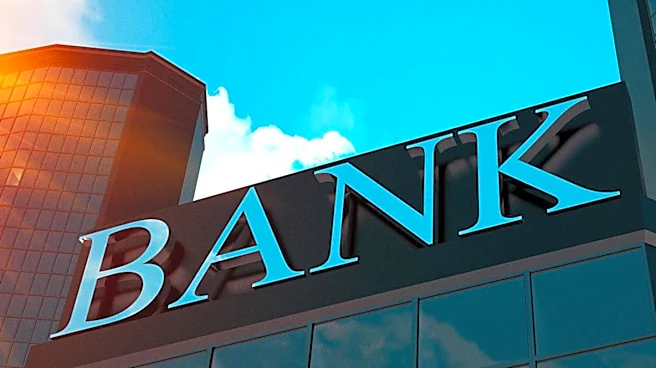
Brian Moynihan, CEO of Bank of America, has stated that recent technological incidents and service outages in the U.S. banking sector are primarily due to the increasing pressure to secure digital systems against rapidly evolving, automated cyberthreats.
Moynihan explained that artificial intelligence (AI) models enable cybercriminals to launch large-scale malicious operations at an unprecedented speed, forcing financial institutions to implement real-time cybersecurity upgrades. These 'patching' efforts, conducted in real-time, are causing some of the observed disruptions. Bank of America has responded by increasing its cybersecurity resources by 30%, dedicating approximately one-third of its $250 million AI investment this year directly to cybersecurity. Moynihan also clarified that instances of a $0 balance during outages do not indicate lost funds but rather a temporary failure to load account data, with deposits remaining protected by federal insurance.
Why It's Important?
The statements from Bank of America's CEO highlight a critical shift in the cybersecurity landscape for the U.S. financial industry. The acceleration of cyberattacks through AI necessitates continuous, real-time security updates, which can inadvertently lead to service disruptions for consumers. This situation underscores the significant investment banks are making in AI for defensive purposes, with Bank of America's cybersecurity AI generating substantial efficiency gains. The comparison that the largest U.S. banks collectively employ as many cybersecurity professionals as the entire federal government emphasizes the private sector's crucial role in national information security. This trend impacts millions of U.S. banking customers who rely on digital services, as well as the broader economy, by stressing the need for robust and adaptive financial infrastructure.
What's Next?
As AI continues to advance, U.S. financial institutions are expected to further integrate AI into their cybersecurity strategies, leading to ongoing real-time system updates and potential intermittent service disruptions. Moynihan expressed confidence that using AI to detect and fix vulnerabilities will improve the situation over time. However, he also noted that state-sponsored cyberattacks exceed the response capacity of private institutions, suggesting a continued need for government intervention and cooperation with federal agencies. Customers are advised to remain vigilant by protecting login credentials, enabling transaction alerts, and setting transaction limits. The banking sector will likely continue to collaborate with federal agencies and the White House to address sophisticated threats that require a coordinated national response.
Beyond the Headlines
The increasing sophistication of AI-driven cyberthreats raises deeper questions about the future of digital security and the balance between innovation and stability in the U.S. financial system. The necessity for banks to become, in effect, information security industries, blurs the lines between traditional financial services and technology. This development could lead to new regulatory frameworks that address the unique challenges posed by AI in cybersecurity, potentially influencing how financial data is protected and how service outages are managed. Furthermore, the reliance on AI for defense against AI-powered attacks creates a technological arms race, with implications for national security and economic stability. The ethical considerations of AI deployment in critical infrastructure, particularly concerning data privacy and algorithmic bias, will also become increasingly prominent.