







What's Happening?
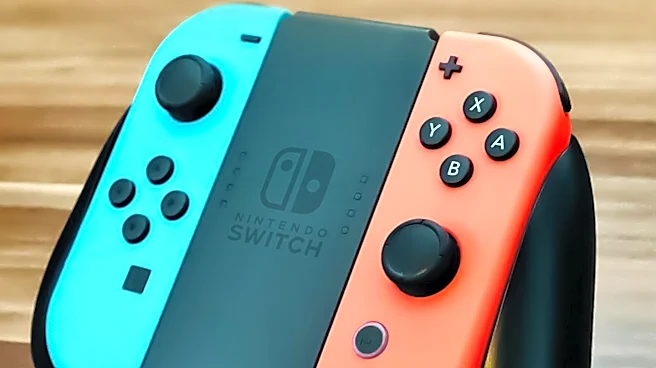
Nintendo is reportedly contemplating the release of a Switch 2 OLED model, which would feature a 1080p OLED screen supplied by Samsung. This potential upgrade is under consideration due to the superior quality of OLED screens compared to the current LCD
displays used in the Switch 2. However, the higher manufacturing costs associated with OLED technology pose a significant challenge. The company is debating whether to absorb these costs or pass them on to consumers, especially in light of rising semiconductor and electronic component prices. The Switch 2, which launched with an LCD screen to keep costs down, is set to see a $50 price increase in the U.S., Canada, and Europe by September 1. If Nintendo proceeds with the OLED model, development could start later this year, with mass production anticipated by late 2027 or 2028.
Why It's Important?
The potential introduction of a Switch 2 OLED model could significantly impact the gaming console market. OLED screens offer better image quality, which could enhance the gaming experience and attract more consumers. However, the increased production costs could lead to higher retail prices, potentially affecting sales. This decision comes at a time when the gaming industry is facing challenges due to rising component costs, which have already led to price hikes for existing models. The move could also influence competitors to consider similar upgrades, potentially leading to a shift in market dynamics. For consumers, the decision will weigh on whether the improved display quality justifies a higher price point.
What's Next?
If Nintendo decides to proceed with the Switch 2 OLED model, the development is expected to begin by the end of the year, with mass production slated for late 2027 or 2028. This timeline suggests that the OLED model could be available around three to four years after the initial launch of the Switch 2. The company will need to carefully consider consumer demand and pricing strategies to ensure the success of the new model. Additionally, Nintendo's decision could prompt reactions from competitors and influence future trends in the gaming console market.