



What's Happening?
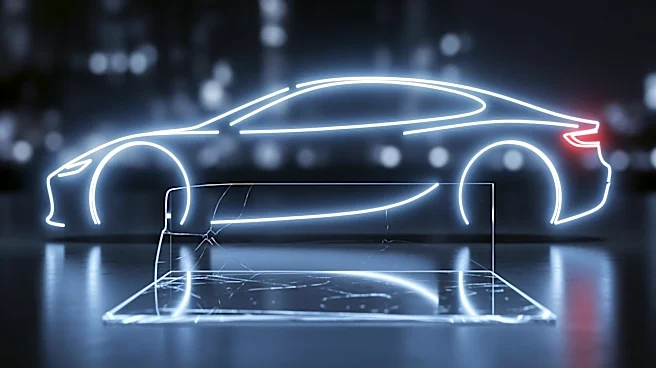
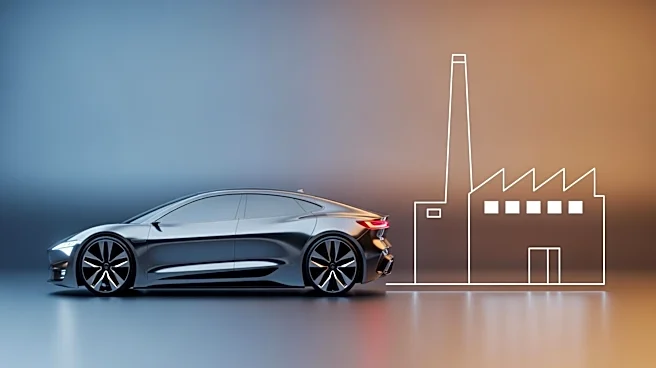
Rivian's CEO, RJ Scaringe, announced that the company plans to release a supervised self-driving system similar to Tesla's Full Self-Driving (FSD) later this year. This advanced driver-assistance system (ADAS) will enable Rivian's second-generation vehicles
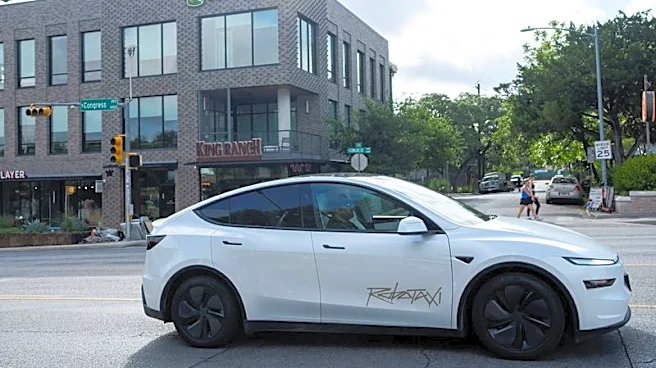
and the new R2 model to perform point-to-point driving with supervision. This development marks a significant upgrade from Rivian's current Universal Hands-Free system, which handles basic driving tasks but lacks the comprehensive capabilities of Tesla's FSD. Additionally, Rivian is working on fully autonomous driving technology for future models and has partnered with Uber to supply up to 50,000 R2 vehicles for robotaxi services.
Why It's Important?
Rivian's entry into the autonomous driving space is a critical step in its strategy to compete with industry leaders like Tesla. The introduction of a Tesla-like self-driving system could enhance Rivian's market appeal and technological credibility. This move also aligns with broader industry trends towards automation and could position Rivian as a key player in the emerging robotaxi market. The partnership with Uber highlights Rivian's commitment to expanding its business model beyond traditional vehicle sales, potentially opening new revenue streams.
What's Next?
Rivian's rollout of its self-driving technology will be closely monitored by industry analysts and consumers. The company's ability to deliver on its promises will be crucial in maintaining investor confidence and market competitiveness. The success of its partnership with Uber could also influence future collaborations and the development of autonomous vehicle services. As Rivian progresses, regulatory and safety considerations will play a significant role in shaping the deployment and acceptance of its self-driving systems.