


What's Happening?
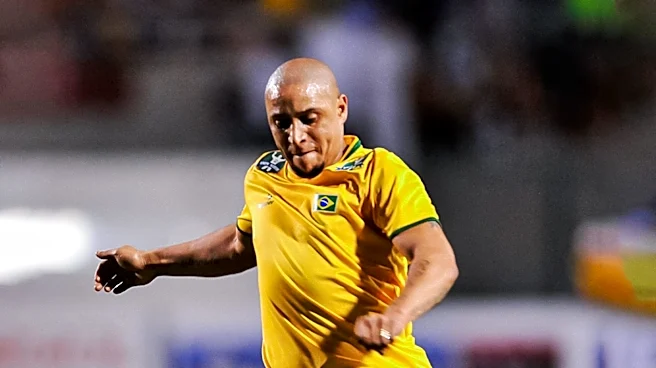
Former Brazilian football star Roberto Carlos has denied widespread reports claiming he converted to Islam. Speculation about his conversion arose after his marriage to Moroccan Souhaila Al-Tahiri and a post by Ali Sahin, a member of Turkey's Justice
and Development Party. Sahin had stated on platform 'X' that he met Sheikh Jihad Hamada in Sao Paulo, who informed him that Carlos had recited the Shahada and chosen Islam four weeks prior. However, Carlos has broken his silence, confirming to the Saudi newspaper "Okaz" that these reports are "untrue." He clarified that while he holds the utmost respect for Islam and appreciates his wife's prayers, he has not converted. He also explained that his wedding ceremony was conducted in multiple forms to accommodate both his Catholic family members and his wife's Muslim friends.
Why It's Important?
This clarification from Roberto Carlos is important as it addresses and corrects misinformation circulating in the media, particularly within Turkish press and social media. The spread of unverified news, especially concerning public figures' personal beliefs and religious conversions, can lead to misunderstandings and misrepresentations. Carlos's direct statement helps to set the record straight, emphasizing the importance of factual reporting and the dangers of speculation. His explanation about the dual nature of his wedding ceremony also highlights the complexities of interfaith marriages and the efforts individuals make to respect different cultural and religious traditions. This event underscores the broader issue of how information, particularly on social media, can quickly gain traction without proper verification, impacting public perception and the individuals involved.
What's Next?
With Roberto Carlos's direct denial, the immediate impact will likely be a cessation of the rumors regarding his conversion to Islam. Media outlets that reported the unverified claims may issue corrections or updates. The incident serves as a reminder for both the public and media to exercise caution and seek direct confirmation when reporting on sensitive personal matters of public figures. It also highlights the ongoing challenge of managing personal narratives in the age of social media, where information can spread globally within moments. For Carlos, this clarification allows him to regain control of his personal story and focus on his professional and private life without the burden of false religious affiliation. The event may also spark discussions about the role of public figures in addressing and debunking misinformation.
Beyond the Headlines
Beyond the immediate correction of a false report, this incident touches upon themes of cultural sensitivity, religious respect, and the impact of public scrutiny on personal lives. Roberto Carlos's statement, expressing "utmost respect for Islam" and acknowledging his wife's religious practices, demonstrates a nuanced approach to interfaith relationships. It underscores the idea that respect and appreciation for another's faith do not automatically equate to conversion. The rapid spread of the conversion rumor, fueled by a politician's social media post, also illustrates the power and potential pitfalls of digital communication in shaping public perception. This event could prompt a broader reflection on the responsibility of public figures and media outlets in disseminating information, particularly when it pertains to deeply personal aspects like religious belief, and the importance of distinguishing between personal respect and religious affiliation.